Friday, June 29, 2012
Review of The King in His Beauty
The King in His Beauty: the Piety of Samuel Rutherford. Ed. Matthew Vogan. 184pp. N.P. Pbk. ISBN 978-1-60178-125-3.
This selection from Rutherford’s writings conveys to the believing reader a sweet savour of the loveliness of Christ. Whether counselling suffering saints or exposing this world’s vain glory, he always leads us to Christ as the only resting place for our souls. We could do far worse at the close of each day than read, meditate
on, and pray over one of these extracts. One factual error needs a mention: the Westminster Assembly did
not meet in Westminster Abbey but in St. Margaret’s, next to it.
J.M.B.
SGU Magazine Peace & Truth 2011:4


Tuesday, June 26, 2012
blogs to add to your reader
A new blog Assert, Maintain, Defend gives Analysis and Comment from the Religion and Morals Committee of the Free Presbyterian Church of Scotland. The title refers to the ordination vows of office bearers to assert, maintain and defend the doctrine, worship and government of the church. Here is an important public means of carrying that out faithfully.
Welcome back to the Virginian Hugenot - we've missed your posts.
Book lovers take a look here. If you're interested in apologetics go here.
Students of the puritans can keep up to date here.
Go for a presbyterian experiment here.
I haven't forgotten the old favourites...keep up the good work.
Welcome back to the Virginian Hugenot - we've missed your posts.
Book lovers take a look here. If you're interested in apologetics go here.
Students of the puritans can keep up to date here.
Go for a presbyterian experiment here.
I haven't forgotten the old favourites...keep up the good work.
Wednesday, June 20, 2012
Samuel Rutherford: an introduction to his theology

Samuel Rutherford was perhaps the most influential religious writer in post-Reformation Scotland. He is famous for his Letters but his theological writings have been strangely neglected. This diverse collection of essays examines the breadth of his theological contribution. Several extracts from his writings are also included.
A preview is available here where it can also be purchased.
Monday, June 11, 2012
spiritual jubilee
The Archbishop of Canterbury's recent sermon on the Jubilee thanksgiving was a rather depressing exercise in pulling down the spiritual in Scripture to the level of mere civic duty rather than using the occasion to speak of true spiritual values and realities especially the glorious gospel of the blessed God.
The Bible speaks of a year of jubilee every fifty years when debts were to be cancelled and those in bondage were to go free. No doubt if we had more of the spirit of this in our temporal affairs Britain would be a better and a fairer country. The Lord Jesus Christ spoke of the Jubilee as pointing forward to His own person, work and gospel (Isaiah 61 and Luke 4).
We could speculate what the Puritan Thomas Watson might have said if he had the opportunity afforded to the Archbishop. He refers in fact quite often to the jubilee.
He might have begun to consider the great kingship of the King of Kings and how he is able to proclaim a spiritual jubilee. He would first show the grievous bondage of sinfulness and misery that is ours due to sin and the Fall in four things. "1. Under the power of Satan. 2. Heirs of God’s wrath. 3. Subject to all the miseries of this life. 4. Exposed to hell and damnation"
"See here our misery by original sin; enslaved to Satan. Eph 2: 2. Satan is said to work effectually in the children of disobedience. What a sad plague is it for a sinner to be at the will of the devil!...If the devil bids a man lie or steal, he does not refuse; and, what is worse, he willingly obeys this tyrant. Other slaves are forced against their will: 'Israel sighed by reason of their bondage,' Exod 2: 23; but sinners are willing to be slaves, they will not take their freedom; they kiss their fetters.
Let us labour to get out of this deplorable condition into which sin has plunged us, and get from under the power of Satan. If any of your children were slaves, you would give great sums of money to purchase their freedom; and when your souls are enslaved, will ye not labour for their freedom? Improve the gospel. The gospel proclaims a jubilee to captives. Sin binds men, but the gospel looses them. Paul's preaching was 'to turn men from the power of Satan to God.' Acts 26: 18. The gospel star leads you to Christ; and if you get Christ, then you are made free, though not from the being of sin, yet from Satan's tyranny. 'If the Son make you free, ye shall be free indeed.' John 8: 36. You hope to be kings to reign in heaven, and will you let Satan reign in you now? Never think to be kings when you die, and slaves while you live. The crown of glory is for conquerors, not for captives. Oh get out of Satan's jurisdiction; get your fetters of sin filed off by repentance."
He might warn solemnly that "in hell, there is no year of release when the damned shall go free! (Mark 9:44). Have people lost their reason—as well as their conscience! They never think—what their sins will bring them to. Though now sin shows its beauteous colors—yet in the end it will bite like a serpent!"
Here in hell "sinners shall be upbraided by their own conscience. This is the worm that never dies, a self-accusing mind. Mark 9: 44. When sinners shall consider that they were in a fair way to the kingdom; that they had a possibility of salvation; that though the door of heaven was strait, yet it was open; that they had the means of grace; that the jubilee of the gospel was proclaimed in their ears; that God called but they refused; that Jesus Christ offered them a plaister of his own blood to heal them, but they trampled it under foot; that the Holy Spirit stood at the door of their heart, knocking and crying to them to receive Christ and heaven, but they repulsed the Spirit, and sent away this dove; and that now, through their own folly and wilfulness, they have lost the kingdom of heaven; a self- accusing conscience will be terrible, it will be like a venomous worm gnawing at the heart".
For the true believer, however, "the day of judgement will be a day of jubilee". More than this: "Death's coming is sooner than Christ's personal coming—and then begins the saint's blessed jubilee". Heaven is "an eternal jubilee; when you shall be freed not only from the power but from the presence of sin". "They shall weep no more, suffer no more. They shall be taken off the torturing wrack and laid in Christ’s bosom. The people of God shall not always be in the iron furnace; a year of Jubilee will come". "This is the great consolation', the Jubilee of the blessed which shall never expire."
"A pardoned soul needs not fear death. He may look on death with joy, who can look on forgiveness with faith. To a pardoned soul, death has lost his sting. Death, to a pardoned sinner, is like arresting a man after the debt is paid; it may arrest, but Christ will show the debt-book crossed in his blood. A pardoned soul may triumph over death, ‘O death! where is thy sting? O grave! where is thy victory?’ He who is pardoned need not fear death: it is not to him a destruction, but a deliverance; it is a day of jubilee or release; it releases him from all his sins. Death comes to a pardoned soul as the angel did to Peter, when he smote him, and beat off his chains, and carried him out of prison; it smites his body, and the chains of sin fall off.
Let us not be content however without the evidence and sense of pardon. He who is pardoned and knows it not, is like one who has an estate bequeathed to him, but knows it not. Our comfort consists in the knowledge of forgiveness. ‘Make me to hear joy.’ Psa 51: 8. There is a jubilee in the soul when we are able to read our pardon. To the witness of conscience God adds the witness of his Spirit; and in the mouth of these two witnesses our joy is confirmed. O labour for the evidence of forgiveness!"
The Bible speaks of a year of jubilee every fifty years when debts were to be cancelled and those in bondage were to go free. No doubt if we had more of the spirit of this in our temporal affairs Britain would be a better and a fairer country. The Lord Jesus Christ spoke of the Jubilee as pointing forward to His own person, work and gospel (Isaiah 61 and Luke 4).
We could speculate what the Puritan Thomas Watson might have said if he had the opportunity afforded to the Archbishop. He refers in fact quite often to the jubilee.
He might have begun to consider the great kingship of the King of Kings and how he is able to proclaim a spiritual jubilee. He would first show the grievous bondage of sinfulness and misery that is ours due to sin and the Fall in four things. "1. Under the power of Satan. 2. Heirs of God’s wrath. 3. Subject to all the miseries of this life. 4. Exposed to hell and damnation"
"See here our misery by original sin; enslaved to Satan. Eph 2: 2. Satan is said to work effectually in the children of disobedience. What a sad plague is it for a sinner to be at the will of the devil!...If the devil bids a man lie or steal, he does not refuse; and, what is worse, he willingly obeys this tyrant. Other slaves are forced against their will: 'Israel sighed by reason of their bondage,' Exod 2: 23; but sinners are willing to be slaves, they will not take their freedom; they kiss their fetters.
Let us labour to get out of this deplorable condition into which sin has plunged us, and get from under the power of Satan. If any of your children were slaves, you would give great sums of money to purchase their freedom; and when your souls are enslaved, will ye not labour for their freedom? Improve the gospel. The gospel proclaims a jubilee to captives. Sin binds men, but the gospel looses them. Paul's preaching was 'to turn men from the power of Satan to God.' Acts 26: 18. The gospel star leads you to Christ; and if you get Christ, then you are made free, though not from the being of sin, yet from Satan's tyranny. 'If the Son make you free, ye shall be free indeed.' John 8: 36. You hope to be kings to reign in heaven, and will you let Satan reign in you now? Never think to be kings when you die, and slaves while you live. The crown of glory is for conquerors, not for captives. Oh get out of Satan's jurisdiction; get your fetters of sin filed off by repentance."
He might warn solemnly that "in hell, there is no year of release when the damned shall go free! (Mark 9:44). Have people lost their reason—as well as their conscience! They never think—what their sins will bring them to. Though now sin shows its beauteous colors—yet in the end it will bite like a serpent!"
Here in hell "sinners shall be upbraided by their own conscience. This is the worm that never dies, a self-accusing mind. Mark 9: 44. When sinners shall consider that they were in a fair way to the kingdom; that they had a possibility of salvation; that though the door of heaven was strait, yet it was open; that they had the means of grace; that the jubilee of the gospel was proclaimed in their ears; that God called but they refused; that Jesus Christ offered them a plaister of his own blood to heal them, but they trampled it under foot; that the Holy Spirit stood at the door of their heart, knocking and crying to them to receive Christ and heaven, but they repulsed the Spirit, and sent away this dove; and that now, through their own folly and wilfulness, they have lost the kingdom of heaven; a self- accusing conscience will be terrible, it will be like a venomous worm gnawing at the heart".
For the true believer, however, "the day of judgement will be a day of jubilee". More than this: "Death's coming is sooner than Christ's personal coming—and then begins the saint's blessed jubilee". Heaven is "an eternal jubilee; when you shall be freed not only from the power but from the presence of sin". "They shall weep no more, suffer no more. They shall be taken off the torturing wrack and laid in Christ’s bosom. The people of God shall not always be in the iron furnace; a year of Jubilee will come". "This is the great consolation', the Jubilee of the blessed which shall never expire."
"A pardoned soul needs not fear death. He may look on death with joy, who can look on forgiveness with faith. To a pardoned soul, death has lost his sting. Death, to a pardoned sinner, is like arresting a man after the debt is paid; it may arrest, but Christ will show the debt-book crossed in his blood. A pardoned soul may triumph over death, ‘O death! where is thy sting? O grave! where is thy victory?’ He who is pardoned need not fear death: it is not to him a destruction, but a deliverance; it is a day of jubilee or release; it releases him from all his sins. Death comes to a pardoned soul as the angel did to Peter, when he smote him, and beat off his chains, and carried him out of prison; it smites his body, and the chains of sin fall off.
Let us not be content however without the evidence and sense of pardon. He who is pardoned and knows it not, is like one who has an estate bequeathed to him, but knows it not. Our comfort consists in the knowledge of forgiveness. ‘Make me to hear joy.’ Psa 51: 8. There is a jubilee in the soul when we are able to read our pardon. To the witness of conscience God adds the witness of his Spirit; and in the mouth of these two witnesses our joy is confirmed. O labour for the evidence of forgiveness!"
Saturday, May 26, 2012
On 26 May...
On 26 May 1892, the Free Church General Assembly passed the Declaratory Act anent the Confession of Faith. (For previous posts in this series see here and here). The Constitutionalists opposing it dissented from it in the strongest of terms. They stated that “the Church is left without any definite, fixed or authoritative standard of doctrine”. Some have tried retrospectively to justify the decision to remain under the Declaratory Act until 1900. The following questions and answers deal with these assertions.
8.Was it not simply a "relieving Act"?
This was a phrase coined in 1894 by Dr Rainy to appease conservatives. The phrase reveals the whole problem. The Act relieved office-bearers from confessing and subscribing to certain doctrines in the Confession of Faith that they otherwise must subscribe to. These were, however, doctrines embedded in the very constitution of the Church. The fact that it was a relieving Act did not nullify the damaging fact that it violated the Constitution of the Free Church by destroying the meaning of the Confession and Formula. It is noteworthy that the dissent tabled by the remaining Constitutionalists in 1894 acknowledged that the Declaratory Act had been confirmed "as a law of the Church, binding upon the Church courts in the administration of discipline".
9.Was it not possible to have remained in the Free Church without being "under" the Act as individuals?
This is a mistake.
a). Take for instance a presbytery that refused to licence a student who wished to appeal to the Declaratory Act. The decision could be appealed against and the Presbytery would undoubtedly have been ordered by Synod or Assembly to give the student his legal right of recourse to the Act. They would have had to proceed to licensing. This proved that noone could avoid obedience to the Act.
b). As Presbyterians each individual was responsible for the actions of the Church as a whole. When a Presbyterian Church by a competent majority changes its creed and constitution, the party opposed to this change has no alternative but to separate from the majority. In a Presbyterian Church each office-bearer discharges his vows to maintain the whole doctrine of the Westminster Confession of Faith not simply as an individual but as a member of a Church. The Free Church departed from the whole doctrine of the Confession so far that it was impossible to discharge these vows. A presbytery is unable to assert, maintain and defend the truth when it does not know and is not permitted to enquire whether or not the students that it licenses make mental appeal to rank heresy (the Declaratory Act).
c). The individual may not have been compelled to accept the doctrines of the Declaratory Act but if his congregation were more swayed by the official position of the Church his preaching would they listen to the "minority opinions" that he expressed in his preaching?
d). The individual was compelled to allow others to accept the doctrines of the Declaratory Act. As an Act of the Church the Declaratory Act was obligatory and the individual was bound to recognise and acknowledge its operation. It is as sinful to give liberty to others to believe false doctrine as to believe it oneself.
10. Was there therefore any way to refuse to administer the Declaratory Act?
There was no way to refuse to administer the Act and those who believe that the Free Church preserved a right of continued protest are mistaken since either this principle was not important to them or they were happy to deny themselves continued protest. The terms of their dissent in 1894 as referred to above show that they were concerned that administration of the Act was in fact binding upon them. Either way, it was impossible for those who remained to continue to fulfil their ordination vows or to exonerate their consciences.
11. What was Rev. D. MacFarlane's response?
Rev. D. MacFarlane read a protest at the 1893 Assembly after the passing into law of the Declaratory Act. Stating that since the Act was now retained in the constitution of the Free Church, the Church "ceases to be the true representative of the Free Church of Scotland". MacFarlane added, "neither my conscience nor my ordination vows allow me to act under what has now been made law in this Church".
12. Why did the Free Presbyterian Church never repeal the Declaratory Act?
The Free Presbyterian Church made a complete break with the Declaratory Act Church in taking up a separate position and therefore never had this Act on its statute book, so there was no need to repeal it.
For more on the intricate questions surrounding the constitutional issues of separation in 1893 as against 1900 see 1893, 1900 and Church Authority.
8.Was it not simply a "relieving Act"?
This was a phrase coined in 1894 by Dr Rainy to appease conservatives. The phrase reveals the whole problem. The Act relieved office-bearers from confessing and subscribing to certain doctrines in the Confession of Faith that they otherwise must subscribe to. These were, however, doctrines embedded in the very constitution of the Church. The fact that it was a relieving Act did not nullify the damaging fact that it violated the Constitution of the Free Church by destroying the meaning of the Confession and Formula. It is noteworthy that the dissent tabled by the remaining Constitutionalists in 1894 acknowledged that the Declaratory Act had been confirmed "as a law of the Church, binding upon the Church courts in the administration of discipline".
9.Was it not possible to have remained in the Free Church without being "under" the Act as individuals?
This is a mistake.
a). Take for instance a presbytery that refused to licence a student who wished to appeal to the Declaratory Act. The decision could be appealed against and the Presbytery would undoubtedly have been ordered by Synod or Assembly to give the student his legal right of recourse to the Act. They would have had to proceed to licensing. This proved that noone could avoid obedience to the Act.
b). As Presbyterians each individual was responsible for the actions of the Church as a whole. When a Presbyterian Church by a competent majority changes its creed and constitution, the party opposed to this change has no alternative but to separate from the majority. In a Presbyterian Church each office-bearer discharges his vows to maintain the whole doctrine of the Westminster Confession of Faith not simply as an individual but as a member of a Church. The Free Church departed from the whole doctrine of the Confession so far that it was impossible to discharge these vows. A presbytery is unable to assert, maintain and defend the truth when it does not know and is not permitted to enquire whether or not the students that it licenses make mental appeal to rank heresy (the Declaratory Act).
c). The individual may not have been compelled to accept the doctrines of the Declaratory Act but if his congregation were more swayed by the official position of the Church his preaching would they listen to the "minority opinions" that he expressed in his preaching?
d). The individual was compelled to allow others to accept the doctrines of the Declaratory Act. As an Act of the Church the Declaratory Act was obligatory and the individual was bound to recognise and acknowledge its operation. It is as sinful to give liberty to others to believe false doctrine as to believe it oneself.
10. Was there therefore any way to refuse to administer the Declaratory Act?
There was no way to refuse to administer the Act and those who believe that the Free Church preserved a right of continued protest are mistaken since either this principle was not important to them or they were happy to deny themselves continued protest. The terms of their dissent in 1894 as referred to above show that they were concerned that administration of the Act was in fact binding upon them. Either way, it was impossible for those who remained to continue to fulfil their ordination vows or to exonerate their consciences.
11. What was Rev. D. MacFarlane's response?
Rev. D. MacFarlane read a protest at the 1893 Assembly after the passing into law of the Declaratory Act. Stating that since the Act was now retained in the constitution of the Free Church, the Church "ceases to be the true representative of the Free Church of Scotland". MacFarlane added, "neither my conscience nor my ordination vows allow me to act under what has now been made law in this Church".
12. Why did the Free Presbyterian Church never repeal the Declaratory Act?
The Free Presbyterian Church made a complete break with the Declaratory Act Church in taking up a separate position and therefore never had this Act on its statute book, so there was no need to repeal it.
For more on the intricate questions surrounding the constitutional issues of separation in 1893 as against 1900 see 1893, 1900 and Church Authority.
Thursday, May 17, 2012
AV4Schools
Schools in England will be sent copies of the King James Bible from this week to mark its 400th anniversary. Every state primary and secondary school in England is to receive a copy of the King James Bible.
Around 24,000 Bibles are being distributed to schools this week by the Department for Education to mark last year’s 400th anniversary of its publication. The Bibles, which have been published by the Oxford University Press, are accompanied by a letter from Michael Gove.
Education Secretary Michael Gove, described it as the most ‘important book written in the English language’. ‘The King James Bible has had a profound impact on our culture. Every school pupil should have the opportunity to learn about this book and the impact it has had on our history, language, literature and democracy.’
Diarmaid MacCulloch, professor of the history of the Church at St Cross College, Oxford University, said the King James Bible ‘represents the culmination of a century of Biblical translation in the first golden age of modern English literature’.
The Right Reverend John Pritchard, Bishop of Oxford and chairman of the Church of England Board of Education, said: ‘This is a fitting way of marking the seminal contribution this version of the Bible has made to our culture. It symbolically places the King James Bible at the heart of the educational process which it inspired.’
Professor David Crystal, author of Begat: the King James Bible and the English language:
'However one sees the King James Bible – whether as inspired text, great literature, cultural identifier, or political stimulus – the fact remains that it has played an unparalleled role in influencing the oratorical and literary style of many writers in English and shaping the expressive character of the language as a whole. Young people are fascinated by the history of their language, when it is presented to them in a vivid and lively way, and to hear the biblical stories that led to such idioms as "salt of the earth" and "fly in the ointment", or (at a younger level) "no room at the inn" and "the land of Nod" is an excellent way of broadening their linguistic horizons and developing their appreciation of the expressive range of English. Having the text easily available will help make this happen.'
There are plenty of teaching resources to help...more...more...more...more
Around 24,000 Bibles are being distributed to schools this week by the Department for Education to mark last year’s 400th anniversary of its publication. The Bibles, which have been published by the Oxford University Press, are accompanied by a letter from Michael Gove.
Education Secretary Michael Gove, described it as the most ‘important book written in the English language’. ‘The King James Bible has had a profound impact on our culture. Every school pupil should have the opportunity to learn about this book and the impact it has had on our history, language, literature and democracy.’
Diarmaid MacCulloch, professor of the history of the Church at St Cross College, Oxford University, said the King James Bible ‘represents the culmination of a century of Biblical translation in the first golden age of modern English literature’.
The Right Reverend John Pritchard, Bishop of Oxford and chairman of the Church of England Board of Education, said: ‘This is a fitting way of marking the seminal contribution this version of the Bible has made to our culture. It symbolically places the King James Bible at the heart of the educational process which it inspired.’
Professor David Crystal, author of Begat: the King James Bible and the English language:
'However one sees the King James Bible – whether as inspired text, great literature, cultural identifier, or political stimulus – the fact remains that it has played an unparalleled role in influencing the oratorical and literary style of many writers in English and shaping the expressive character of the language as a whole. Young people are fascinated by the history of their language, when it is presented to them in a vivid and lively way, and to hear the biblical stories that led to such idioms as "salt of the earth" and "fly in the ointment", or (at a younger level) "no room at the inn" and "the land of Nod" is an excellent way of broadening their linguistic horizons and developing their appreciation of the expressive range of English. Having the text easily available will help make this happen.'
There are plenty of teaching resources to help...more...more...more...more
Friday, May 11, 2012
competing presbyterian denominations
A recent blog post counts up 11 Presbyterian denominations in Scotland. Another blog analyses shrewdly the reasons for this.
Should we be indifferent about the increasing number of competing presbyterian denominations? How does this relate to the unity of the visible Church emphasised in Scripture? This booklet addresses the sensitive area of schism in order to draw some applications for the contemporary context with help from the biblical views of older presbyterian writers. Available here as a free download.

Tuesday, May 08, 2012
one visible Christian church and its government
David Dickson commenting on Psalm 47:9 shows that the visible Church can, should and will be one in its government throughout the world.
'As there is a necessity of the union of Jews and Gentiles in one visible Christian church, because it is promised and prophesied that it shall be so; so there is reason to wish for the more evident union of them, that they may be as eminently consociate as ever the Christian churches were, either in the Apostles' time, or in the Christian emperors' time, in a general assembly or oecumenical council; because there is at least a possibility of an oecumenical council, or a general assembly of Jews and Gentiles in this world under Christ their King. This place makes it plain, because after it is foretold that there shall be such a union of all the people of the God of Abraham, Jews and Gentiles, as their princes shall be gathered together, he takes away the chief ground of a great objection which may be made from the discord and disagreement of the princes of the world; some of them being averse altogether from the Christian religion, some of them from the true religion of Christ, and all of them almost dissenting one from another, and warring one against another; whereby now for many years the gathering of an cecumenical council hath not been possible. He meeteth this objection in the text, saying, for the shields of the earth belong unto God, that is, the hearts and power of all the kings of the earth are in the Lord's hand, and he hath the disposing of shields, armies, and ammunition, with all their commanders and rulers in the world, and therefore can make them serviceable for the nearest conjunction and union of his visible church, which can be for his glory in this world, as he sees fit, how and when he will.'
We need to recover the worldwide vision of the Second Reformation divines. Rutherford and Gillespie stressed on several occasions the ideal of an ecumenical Council of national churches. It is important to bear in mind the remarks of James Walker:
'The visible church, in the idea of the Scottish theologians, is catholic. You have not an indefinite number of Parochial, or Congregational, or National churches, constituting, as it were, so many ecclesiastical individualities, but one great spiritual republic, of which these various organizations form a part. The visible church is not a genus, so to speak, with so many species under it. It is thus you may think of the State, but the visible church is a totum integrale, it is an empire. The churches of the various nationalities constitute the provinces of this empire; and though they are so far independent of each other, yet they are so one, that membership in one is membership in all, and separation from one is separation from all . . . This conception of the church, of which, in at least some aspects, we have practically so much lost sight, had a firm hold of the Scottish theologians of the seventeenth century.' Dr. James Walker in The Theology of Theologians of Scotland. (Edinburgh: Rpt. Knox Press, 1982) Lecture iv. pp.95-6.
'As there is a necessity of the union of Jews and Gentiles in one visible Christian church, because it is promised and prophesied that it shall be so; so there is reason to wish for the more evident union of them, that they may be as eminently consociate as ever the Christian churches were, either in the Apostles' time, or in the Christian emperors' time, in a general assembly or oecumenical council; because there is at least a possibility of an oecumenical council, or a general assembly of Jews and Gentiles in this world under Christ their King. This place makes it plain, because after it is foretold that there shall be such a union of all the people of the God of Abraham, Jews and Gentiles, as their princes shall be gathered together, he takes away the chief ground of a great objection which may be made from the discord and disagreement of the princes of the world; some of them being averse altogether from the Christian religion, some of them from the true religion of Christ, and all of them almost dissenting one from another, and warring one against another; whereby now for many years the gathering of an cecumenical council hath not been possible. He meeteth this objection in the text, saying, for the shields of the earth belong unto God, that is, the hearts and power of all the kings of the earth are in the Lord's hand, and he hath the disposing of shields, armies, and ammunition, with all their commanders and rulers in the world, and therefore can make them serviceable for the nearest conjunction and union of his visible church, which can be for his glory in this world, as he sees fit, how and when he will.'
We need to recover the worldwide vision of the Second Reformation divines. Rutherford and Gillespie stressed on several occasions the ideal of an ecumenical Council of national churches. It is important to bear in mind the remarks of James Walker:
'The visible church, in the idea of the Scottish theologians, is catholic. You have not an indefinite number of Parochial, or Congregational, or National churches, constituting, as it were, so many ecclesiastical individualities, but one great spiritual republic, of which these various organizations form a part. The visible church is not a genus, so to speak, with so many species under it. It is thus you may think of the State, but the visible church is a totum integrale, it is an empire. The churches of the various nationalities constitute the provinces of this empire; and though they are so far independent of each other, yet they are so one, that membership in one is membership in all, and separation from one is separation from all . . . This conception of the church, of which, in at least some aspects, we have practically so much lost sight, had a firm hold of the Scottish theologians of the seventeenth century.' Dr. James Walker in The Theology of Theologians of Scotland. (Edinburgh: Rpt. Knox Press, 1982) Lecture iv. pp.95-6.
Monday, April 23, 2012
A constitutional Act
The debate in 1892 around the Declaratory Act related to its constitutional nature. This is well discussed in an anonymous letter to the Glasgow Herald in September of that year. Archibald McNeilage appears to have taken similar views in a separate letter to the same newspaper.
Donald Beaton wrote much later on the subject: "The founders of the Free Presbyterian Church, while holding that the majority in passing the Declaratory Act were acting ultra vires, inasmuch as a use was made of the Barrier Act for which it was never intended, at the same time asserted that the Declaratory Act, being inconsistent with the Confession, violated the Constitution of the Free Church. In taking up positions seemingly at variance, there was no inconsistency. Both positions were tenable and consistent with the real facts of the situation created by the ecclesiastical policy of one of the astutest ecclesiastical leaders Scotland ever had, though, alas! his gifts were prostituted to a bad cause." For more on the constitutional aspect of the Act see here.
We can resume the questions that we began in relation to this Act in a previous post.
4.Was it not only a mere Act and not part of the constitution?
The Declaratory Act was not just a resolution adopted by the Assembly; it was passed by a majority of presbyteries under the Barrier Act in 1893. The Barrier Act makes provision that no proposal of the Assembly shall be regarded as a standing law and constitution of the Church without the consent of the majority of presbyteries. It follows that the Declaratory Act being passed under this Act formed part of the constitution, thereby changing it (by adding to and taking from the Confession of Faith).
5. Was it not beyond the powers (ultra vires) of the Free Church to change its constitution?
A Church has no right to change its constitution in the face of a dissenting minority and remain the same body - it is ultra vires. A Church can of course change its constitution unanimously and remain the same Church, particularly if there is nothing contradictory in the new constitution. What happens when a Church does change its constitution through the appropriate legal means but without entire unanimity? It ceases to be the same body that it was and the dissenting minority instead become the true representatives of the original body. This is what happened in 1893 and why the FP Church was now the true representative of the Free Church of 1843.
6.Did the Formula (ordination vows) not have to be changed before the Constitution was altered?
The Act had to be a law before it could be subscribed to. Putting the Act into the Questions and Formula did not make it a law - it was already in force. The failure to change the Formula was a political ploy to achieve the desired outcome without upsetting the minority. It was the Church's Act and it ensured that anyone could accept the doctrines of the Act without hindrance. It was found to be impossible for anyone to subscribe to the Westminster Confession of Faith and add an explicit rejection of the Declaratory Act. James Macdonald, Dornoch inserted this kind of rejection of the Act into his subscription (1893) but the Synod of Caithness and Sutherland ordered that it be removed from the records. The fact that the Formula was unchanged was due to a lack of honesty which would have required subscription to these doctrines if the Church was convinced that they were true. The Declaratory Act also emptied the Formula of all meaning. It was no longer possible to have any complete assurance or definite indication as to the views of ministers and office-bearers. The truth was that it was the Formula itself that was a dead letter and not the Declaratory Act. Furthermore by the Act the Free Church sanctioned the sinful dishonesty of vowing full subscription while having mental reservations.
The idea that the Act was inoperative because the Formula had not changed is not valid. Men were availing themselves of the Declaratory Act in subscribing the Formula and the Constitutionalists were powerless to prevent this or even detect it, and so unable to keep their ordination vows. Maurice Grant recognises the weakness of the argument in relation to the Formula. “In their Reasons for Dissent at the passing of the Declaratory Act in 1892 the Free Church constitutionalists specifically stated that the Act 'must be regarded as a new law of this Church, which alters the relations of the Church to the Confession of Faith, by substituting for the doctrines therein embodied the statements made in the Act, as the future standard of orthodoxy in this Church' (Minutes of Free Church General Assembly, 1892). The argument that no change had been made in the Questions and Formula is in any event something of an academic one, since the Assembly of 1894, in what was presented as a relieving Act, stated that 'those who are licensed or ordained to office in this Church, in answering the Questions and subscribing the Formula, are entitled to do so in view of the said Declaratory Act'. Thus, though the Questions and Formula themselves were unchanged, the facility for an ordinand to take advantage of the Declaratory Act when answering and subscribing them was specifically written into the law of the Church. It is best therefore to look elsewhere for a satisfactory vindication of the constitutionalists' position” (The Heirs of the Disruption in Crisis and Recovery 1893-1920).
7.Was the Act not just a dead letter on the statute book?
No, because protests against the Act (e.g. in the Synod of Glenelg) were not permitted by the General Assembly (1893). This showed that individuals were bound by the Act even in their consciences since it was impossible to protest against it in order to clear the conscience. An overture by Rev. Angus Galbraith, Lochalsh (Free Church minority 1900) to the same General Assembly recognised this fact by observing that it was clear that it was not "optional for them to receive or to reject this Act". He went on to say that it "was very small comfort to be told that this Act was not intended to interfere with their personal beliefs when they learned that it regulated their creed and public testimony as a Church". Dr. Rainy responded with an indication of the real force of the Act, emphasising that "the Act has set forth the Church's understanding of the range of opinion which is open in this Church in its own understanding of what is involved in the acceptance of the Confession of Faith by our ministers and elders...as long as it lasts, no doubt it is authoritative."
Friday, April 20, 2012
The Declamatory Act
declamatory (dɪˈklæmətərɪ)
merely rhetorical; empty and bombastic
The above is a good definition of the Free Church Declaratory Act of 1892 which, as noted here, is 120 years old in May. It declaimed against the Westminster Confession of Faith. It was mere empty rhetoric designed to encompass and deceitfully hide a wide variety of errors in opposition to the precise theology of the Confession of Faith. In a phrase they "destroyed the integrity of the Confession of Faith". The only unobjectionable and non-declamatory word in the Act was the first one, "Whereas". It was, as BB Warfield described it, "a bungling piece of work".
In History of the Presbyterian Church of New Zealand, Rev. John Dickson writes:
In History of the Presbyterian Church of New Zealand, Rev. John Dickson writes:
A creed is only a light-holder; to declaim against it is to act like the savage [sic] who, walking through the streets of London at night, complained that the lamp-posts were an obstruction to traffic.
See here for more on exactly how the Declaratory Act was guilty of subverting as well as declaiming against the Confession of Faith.
1.What was the Declaratory Act?
It was officially called "Act Anent Confession of Faith" and was passed by the Free Church in 1892. It stated that its purpose was "to remove difficulties and scruples which have been felt by some in relation to the declaration of belief required from" office-bearers, ministers, probationers etc. In other words some seeking office in the Church could not (although ordination vows explicitly required it) affirm that the "whole doctrine" of the Westminster Confession of Faith was their personal confession of faith. The Church sought a way to get around this. The Declaratory Act allowed men to assent publicly to the same vows of strict and full subscription but privately they could make secret appeal to the Declaratory Act's qualification of the confession.
2.What was the motivation for the Act?
The motivation for the Act was to permit students who held views contrary to the Westminster Confession of Faith in terms of evolution, higher criticism, Arminianism etc. to subscribe in a qualified way to the Westminster Confession of Faith without abandoning such convictions. It was also intended to facilitate union with the United Presbyterian Church who had passed their own Declaratory Act that was practically identical to the Free Church 1892 Act.
3.What was the effect of the Declaratory Act?
By the Declaratory Act the Free Church "destroyed the integrity of the Confession of Faith as understood and accepted by the Disruption Fathers and their predecessors" thereby overthrowing "the fixed Doctrinal Constitution of the Church" (Rev. James S. Sinclair). The Church's relation to the Westminster Confession of Faith changed from entire acceptance to modified acceptance. The Church's declaration was that it "maintains, holds" doctrines that were actually subversive of the Confession while "disclaiming" certain crucial confessional doctrines. This amounted to an additional creed. The Church was also giving approval and shelter to the false doctrines named above and those who held to them. Rev. James S. Sinclair said: "The Free Church in order to please the fickle tastes of carnal men has traitorously lowered the standard of accepted truth, and weakened down the saving doctrines of the Gospel, so that they shall be powerless for any spiritual good to this or future generations".
Saturday, April 14, 2012
Praise is Comely - wordle
See previous post.
'A line of praise is worth a leaf of prayer, an hour of praise is worth a day of fasting and mourning'
- John Livingstone

Wednesday, April 11, 2012
Faith in His blood
"Faith looks for acceptance to nothing in itself, but goes quite out of a man's self, and rests upon the merits and death of Christ as only satisfactory to justice, and through which it expects to be accepted of God:—therefore it is faith in his blood."
-- John Brown of Wamphray
-- John Brown of Wamphray
Thursday, April 05, 2012
The autobiography of Jesus Christ
The gospels give us biographies of the Lord Jesus Christ but with the exception of the Servant Songs of Isaiah it is only really the Book of Psalms that gives us his autobiography. E.S. McKitrick states "the person of Christ is fully presented in the Psalter, as well as His work. Indeed, it has been asserted, and not without reason, that out of the Psalms one could compile a biography of Jesus". The proper term here would be autobiography, but he goes on helpfully:
His eternal Sonship is declared in Ps 2: "Jehovah said unto Me, Thou art My Son; This day have I begotten Thee." [Ps 2:7] His incarnation is foretold in Ps 40 as applied in Heb 10: "Sacrifice and offering Thou wouldest not, but a body didst Thou prepare for Me," [Heb 10:5] and in Ps 22: "Thou art My God since My mother bore Me." [Ps 22:10] It is at least suggestive of the supernatural birth of Jesus that, while He speaks repeatedly and tenderly in Ps 22 of a human mother, there is not a word concerning a human father. His favorite name, "Son of Man," is taken from Ps 8, as well as from the Book of Daniel. As we have seen, He is presented in Ps 2 as the "Son of God," and in the same Psalm He is called the "Anointed," that is, "the Christ," while Ps 23 is evidently the origin of "the Good Shepherd." All the usual names applied to Him in the New Testament are given in the Psalms, except the name Jesus, and it is given frequently in substance, if not in form. His trust in God and obedience to Him are beautifully set forth in the whole of Ps 18; His moral beauty in Ps 45—"Thou art fairer than the children of men" [Ps 45:2]; likewise His anointing of the Holy Spirit—"Grace is poured into Thy lips." [Ps 45:2] His life of self-sacrifice is shown from Ps 69 by the Apostle Paul, "For Christ also pleased not Himself; but, as it is written, The reproaches of them that reproached Thee fell on Me." [Rom 15:3] In this Psalm we have His passionate devotion to God's service—"The zeal of Thine house hath eaten Me up." [Ps 69:9] His taking sinners into union with Himself—a truth which underlies the whole Psalter—is stated in Ps 22, as interpreted in the Epistle to the Hebrews—"I will declare Thy name unto My brethren." [Ps 22:22] His rejection is mentioned in Ps 69—"I am become a stranger unto My brethren, and an alien unto My mother's children"; "They that hate Me without cause are more than the hairs of My head." [Ps 69:8,4] His triumphal entry into Jerusalem was foreshadowed in Ps 8—"Out of the mouths of babes and sucklings hast Thou established strength," [Ps 8:2] and in Ps 118—"Blessed be He that cometh in the name of Jehovah." [Ps 118:26] The conspiracy of His foes against Him is in Ps 31—"They took counsel together against Me, they devised to take away My life." [Ps 31:13] His betrayal by one of the Twelve is foretold in Ps 41, as He Himself pointed out—"He that eateth My bread lifted up his heel against Me." [Ps 41:9] The manner of His death is foretold in Ps 22—"They pierced My hands and My feet." Even the disposition of His clothes is mentioned—"They part My garments among them, and upon My vesture do they cast lots." [Ps 22:16,18] His cry of desertion was in the opening words of this Psalm, in which they are followed by a most accurate and pathetic description of the whole crucifixion scene. Ps 69 adds another line to the dark picture—"They gave Me also gall for My food; and in My thirst they gave Me vinegar to drink." [Ps 69:21] That His bones should not be broken, as were those hanging on either side of Him, is predicted in Ps 34, as applied in John's Gospel—"A bone of Him shall not be broken." [John 19:36] His dying words were from Ps 31—"Into Thy hands I commend My spirit." [Ps 31:5] His resurrection is foretold in Ps 16, as cited in Peter's sermon at Pentecost—"Thou wilt not leave My soul unto Hades, neither wilt Thou give Thy Holy One to see corruption." [Ps 16:10] His ascension, also, is mentioned—"Thou hast ascended on high" [Ps 68:18]; "God is gone up with a shout, Jehovah with the sound of a trumpet." [Ps 47:5] His kingdom and its ultimate triumph are described in the familiar Ps 72, and His coming in judgment in Ps 50 and Ps 98—"Our God cometh, and doth not keep silence"; "He calleth to the heavens above, and to the earth, that He may judge His people"; "For He cometh to judge the earth; He will judge the world with righteousness, and the peoples with equity." [Ps 50:3-4; Ps 98:9]
In these revelations of Jesus in the Psalter there is this advantage over all others—He speaks mainly in the first person, and tells us His own feelings while working and suffering and dying for our redemption. And these revelations are chiefly in the past tense, as if to indicate that they were intended more for the gospel age than for that in which they were written.
'Christ in the Psalms' E. S. McKitrick From The Psalms in Worship, edited by John McNaugher, Pittsburgh 1907.
His eternal Sonship is declared in Ps 2: "Jehovah said unto Me, Thou art My Son; This day have I begotten Thee." [Ps 2:7] His incarnation is foretold in Ps 40 as applied in Heb 10: "Sacrifice and offering Thou wouldest not, but a body didst Thou prepare for Me," [Heb 10:5] and in Ps 22: "Thou art My God since My mother bore Me." [Ps 22:10] It is at least suggestive of the supernatural birth of Jesus that, while He speaks repeatedly and tenderly in Ps 22 of a human mother, there is not a word concerning a human father. His favorite name, "Son of Man," is taken from Ps 8, as well as from the Book of Daniel. As we have seen, He is presented in Ps 2 as the "Son of God," and in the same Psalm He is called the "Anointed," that is, "the Christ," while Ps 23 is evidently the origin of "the Good Shepherd." All the usual names applied to Him in the New Testament are given in the Psalms, except the name Jesus, and it is given frequently in substance, if not in form. His trust in God and obedience to Him are beautifully set forth in the whole of Ps 18; His moral beauty in Ps 45—"Thou art fairer than the children of men" [Ps 45:2]; likewise His anointing of the Holy Spirit—"Grace is poured into Thy lips." [Ps 45:2] His life of self-sacrifice is shown from Ps 69 by the Apostle Paul, "For Christ also pleased not Himself; but, as it is written, The reproaches of them that reproached Thee fell on Me." [Rom 15:3] In this Psalm we have His passionate devotion to God's service—"The zeal of Thine house hath eaten Me up." [Ps 69:9] His taking sinners into union with Himself—a truth which underlies the whole Psalter—is stated in Ps 22, as interpreted in the Epistle to the Hebrews—"I will declare Thy name unto My brethren." [Ps 22:22] His rejection is mentioned in Ps 69—"I am become a stranger unto My brethren, and an alien unto My mother's children"; "They that hate Me without cause are more than the hairs of My head." [Ps 69:8,4] His triumphal entry into Jerusalem was foreshadowed in Ps 8—"Out of the mouths of babes and sucklings hast Thou established strength," [Ps 8:2] and in Ps 118—"Blessed be He that cometh in the name of Jehovah." [Ps 118:26] The conspiracy of His foes against Him is in Ps 31—"They took counsel together against Me, they devised to take away My life." [Ps 31:13] His betrayal by one of the Twelve is foretold in Ps 41, as He Himself pointed out—"He that eateth My bread lifted up his heel against Me." [Ps 41:9] The manner of His death is foretold in Ps 22—"They pierced My hands and My feet." Even the disposition of His clothes is mentioned—"They part My garments among them, and upon My vesture do they cast lots." [Ps 22:16,18] His cry of desertion was in the opening words of this Psalm, in which they are followed by a most accurate and pathetic description of the whole crucifixion scene. Ps 69 adds another line to the dark picture—"They gave Me also gall for My food; and in My thirst they gave Me vinegar to drink." [Ps 69:21] That His bones should not be broken, as were those hanging on either side of Him, is predicted in Ps 34, as applied in John's Gospel—"A bone of Him shall not be broken." [John 19:36] His dying words were from Ps 31—"Into Thy hands I commend My spirit." [Ps 31:5] His resurrection is foretold in Ps 16, as cited in Peter's sermon at Pentecost—"Thou wilt not leave My soul unto Hades, neither wilt Thou give Thy Holy One to see corruption." [Ps 16:10] His ascension, also, is mentioned—"Thou hast ascended on high" [Ps 68:18]; "God is gone up with a shout, Jehovah with the sound of a trumpet." [Ps 47:5] His kingdom and its ultimate triumph are described in the familiar Ps 72, and His coming in judgment in Ps 50 and Ps 98—"Our God cometh, and doth not keep silence"; "He calleth to the heavens above, and to the earth, that He may judge His people"; "For He cometh to judge the earth; He will judge the world with righteousness, and the peoples with equity." [Ps 50:3-4; Ps 98:9]
In these revelations of Jesus in the Psalter there is this advantage over all others—He speaks mainly in the first person, and tells us His own feelings while working and suffering and dying for our redemption. And these revelations are chiefly in the past tense, as if to indicate that they were intended more for the gospel age than for that in which they were written.
'Christ in the Psalms' E. S. McKitrick From The Psalms in Worship, edited by John McNaugher, Pittsburgh 1907.
Wednesday, March 21, 2012
Praise is Comely

This booklet is intended for all who are concerned
for the glory and honour of God. The praise of God
is a vitally important means of glorifying His Name
and all are therefore encouraged to enter into it as
fully as possible – whatever may be their ability.
The booklet outlines the biblical basis for taking
seriously congregational psalm-singing since due
consideration, reverent care and skill in this area
are a spiritual priority rather than a matter of mere
musical taste. Further aspects could well be developed
but the basic principles of public praise are to
be found here in order to bring the subject within
the reach of everyone.
That I may show forth all thy praise in the gates
of the daughter of Zion …
Psalm 9:14
Published by Kirk Session of the Inverness Congregation of the Free Presbyterian Church of Scotland.
£2 (not including p&p) from FP Bookroom.
CONTENTS
Preface
1
We are all commanded to praise God
2
We are all commanded to praise
God in singing
3
We are all commanded to praise God
in singing together
4
We are all commanded to praise God in
singing together to edification
5
We are all commanded to praise God in
singing together to edification and comeliness
Thursday, March 01, 2012
The manner in which psalms are to be sung
Something re: singing of praise before too long but for now...
From the Body of Practical Divinity by theologian John Gill (1697-1771):
The manner in which psalms are to be sung may be next considered. . . .
With grace in the heart,” (Col. 3:16) with the several graces; not one note, but a mixture of notes, makes melody; many voices, yet one sound, make a chorus: so singing must be with various graces; with faith in God, without which it is impossible to please him; and with strong love and affection for him; and also “with reverence and godly fear;” for God is “fearful in praises” reverend in them, to be praised with great fear and reverence of his Majesty. . . .
We should have in view the glory of God; for we are to “sing unto the Lord;” not to ourselves, merely to raise our natural affections, to gain applause from others, by the fineness of our voice, and by observing an exact conformity to the tune; but to the glory of Father, Son, and Spirit, the one God, who condescends to inhabit the praises of Israel.
From the Body of Practical Divinity by theologian John Gill (1697-1771):
The manner in which psalms are to be sung may be next considered. . . .
With grace in the heart,” (Col. 3:16) with the several graces; not one note, but a mixture of notes, makes melody; many voices, yet one sound, make a chorus: so singing must be with various graces; with faith in God, without which it is impossible to please him; and with strong love and affection for him; and also “with reverence and godly fear;” for God is “fearful in praises” reverend in them, to be praised with great fear and reverence of his Majesty. . . .
We should have in view the glory of God; for we are to “sing unto the Lord;” not to ourselves, merely to raise our natural affections, to gain applause from others, by the fineness of our voice, and by observing an exact conformity to the tune; but to the glory of Father, Son, and Spirit, the one God, who condescends to inhabit the praises of Israel.
Wednesday, February 15, 2012
Scottish Reformation Society Historical Journal Vol 2
 The Scottish Reformation Society Historical Journal contains articles on Scottish Church history written from an evangelical perspective. Subjects in the 2012 issue include the Constitutional Principle of the Scottish Reformation; Robert Bruce in Inverness; Walter Ker and the Sweet Singers; Alexander Shields and the Revolution Settlement; the Literary Labours of the Apostle of the North; Robert Shanks of Buckie; James MacGregor and the Robertson Smith Case; Resistance to the 1892 Declaratory Act in Argyllshire; and the Chisholmites of Achmore.
Monday, February 06, 2012
the progress of sin
"Vice first is pleasing; then it grows easily; then delightful; then frequent; then habitual; then confirmed; then the man is impenitent; then he is obstinate; then he resolves never to repent; and then he is damned." Edward Reynolds as quoted by Charles Bridges on Eccl. 8:11
Wednesday, January 18, 2012
Top 5 Books that I read in 2011
It's incredible to me that I managed to work through any book from cover to cover last year (beside books for toddlers) - a top 10 would have been more challenging.
1. Narrative of Mr. James Nimmo written for his own satisfaction to keep in some remembrance the Lord's way dealing and kindness towards him, 1645-1709.
Providence brought this to me through the kindness of a friend. This is remarkable not for the Covenanting history but the personal struggles of the writer and his clear witness to the guidance of God on his path through earnest prayer and supplication. I hope that the impression made does not pass away like the morning dew.
2. The Last Days of Jesus: The Forty Days Between the Resurrection and the Ascension by T V Moore
This is a remarkable book, still to be fully finished in reading but one that sparkles with rare insight into the understanding of the Scriptures and warms with devotional and practical usefulness. Although it is by a Victorian writer from America, it is by no means verbose but on the contrary very concise and suggestive.
3. The Next Story: Life and Faith after the Digital Explosion by Tim Challies.
Possibly a bit more influential in describing and measuring the impact of the Digital Explosion upon our lives and its risks than in how to respond to it. Essential reading nevertheless.
4. The Rage Against God: Why Faith is the Foundation of Civilisation by Peter Hitchens
An interesting personal testimony of how he returned to belief in God against the systematic post-war destruction of Christian influence. A former Trotskyist, he demonstrates from close knowledge, the weakness of atheistic arguments in relation to religion as they relate to the track record of atheistic regimes in the 20th Century.
5. Begat: The King James Bible and the English Language by David Crystal
In the 400th Anniversary Year a truly original study showing exactly how many proverbial expressions we owe to the AV.
The blessings of sufficient time and sight to read and abundant material to read are not to be taken for granted. We might take up the words of the Larger Catechism 193 and "pray for ourselves and others, that both they and we, waiting upon the providence of God from day to day in the use of lawful means, may, of his free gift, and as to his fatherly wisdom shall seem best, enjoy a competent portion of them; and have the same continued and blessed unto us in our holy and comfortable use of them, and contentment in them". This is one of the outward blessings that we owe to the kindness of the Most High, and we need grace to be humbly and diligently making use of it to the glory of God with thankfulness.
1. Narrative of Mr. James Nimmo written for his own satisfaction to keep in some remembrance the Lord's way dealing and kindness towards him, 1645-1709.
Providence brought this to me through the kindness of a friend. This is remarkable not for the Covenanting history but the personal struggles of the writer and his clear witness to the guidance of God on his path through earnest prayer and supplication. I hope that the impression made does not pass away like the morning dew.
2. The Last Days of Jesus: The Forty Days Between the Resurrection and the Ascension by T V Moore
This is a remarkable book, still to be fully finished in reading but one that sparkles with rare insight into the understanding of the Scriptures and warms with devotional and practical usefulness. Although it is by a Victorian writer from America, it is by no means verbose but on the contrary very concise and suggestive.
3. The Next Story: Life and Faith after the Digital Explosion by Tim Challies.
Possibly a bit more influential in describing and measuring the impact of the Digital Explosion upon our lives and its risks than in how to respond to it. Essential reading nevertheless.
4. The Rage Against God: Why Faith is the Foundation of Civilisation by Peter Hitchens
An interesting personal testimony of how he returned to belief in God against the systematic post-war destruction of Christian influence. A former Trotskyist, he demonstrates from close knowledge, the weakness of atheistic arguments in relation to religion as they relate to the track record of atheistic regimes in the 20th Century.
5. Begat: The King James Bible and the English Language by David Crystal
In the 400th Anniversary Year a truly original study showing exactly how many proverbial expressions we owe to the AV.
The blessings of sufficient time and sight to read and abundant material to read are not to be taken for granted. We might take up the words of the Larger Catechism 193 and "pray for ourselves and others, that both they and we, waiting upon the providence of God from day to day in the use of lawful means, may, of his free gift, and as to his fatherly wisdom shall seem best, enjoy a competent portion of them; and have the same continued and blessed unto us in our holy and comfortable use of them, and contentment in them". This is one of the outward blessings that we owe to the kindness of the Most High, and we need grace to be humbly and diligently making use of it to the glory of God with thankfulness.
Wednesday, December 28, 2011
questions we should not ask#8
We are not to ask such a question as that: “What have we to do with Thee, Jesus, Thou Son of God?” (Matt. 8. 29). This is the language of the devil; and yet such devilish hearts are among us that say the same thing. Some say it more closely and hiddenly under the shadow of humility: What have I to do with Christ, that am so unworthy of Him? What have I to do with His blood, His righteousness and merit, His Spirit, His promise, His grace, His fulness? Is it for the like of me? Have I any concern or interest therein? Yes, you have to do with all these, and you are called to make use of them, unless you will rank yourselves with the devils to whom they were never preached.
Again, some say it more grossly and profanely: What have we to do with Christ? What have we to do with His ordinances? What have we to do with His sacraments? What have we to do with His Sabbaths? What have we to do with so many sermons? We are wearied to the heart with them, and we care not a fig for these things. “What a weariness is it?” “Take a carnal man,” says one, “tie him to a post, and you may kill him with praying and preaching.” We are not so foolish as to trouble ourselves about these things. What have we to do with them? Lord, pity such creatures, for they are as like the devil as they can look. “What have we to do with Thee, Jesus, Thou Son of God?”
- Ralph Erskine
Again, some say it more grossly and profanely: What have we to do with Christ? What have we to do with His ordinances? What have we to do with His sacraments? What have we to do with His Sabbaths? What have we to do with so many sermons? We are wearied to the heart with them, and we care not a fig for these things. “What a weariness is it?” “Take a carnal man,” says one, “tie him to a post, and you may kill him with praying and preaching.” We are not so foolish as to trouble ourselves about these things. What have we to do with them? Lord, pity such creatures, for they are as like the devil as they can look. “What have we to do with Thee, Jesus, Thou Son of God?”
- Ralph Erskine
Wednesday, December 21, 2011
swift to its close ebbs out life's little day: meditations for the shortest day
22 December is the shortest day in 2011, when the hours of sunlight are fewest and the sun follows its lowest arc through the sky. Our life is but a brief day, the briefest of days. Time is short and eternity is very long. Each day represents a life in miniature and the opportunities of that life in miniature. The shortest day perhaps best represents our brief sojourn here.
"Then Jesus said unto them, Yet a little while is the light with you. Walk while ye have the light, lest darkness come upon you: for he that walketh in darkness knoweth not whither he goeth." John 12:35
"Eternity to the godly is a day that has no sunset; eternity to the wicked is a night that has no sunrise."
—Thomas Watson
"I must work the works of him that sent me, while it is day: the night cometh, when no man can work." John 9:4
"Our life is our day, in which it concerns us to do the work of the day. We must be busy, and not waste day-time; it will be time to rest when our day is done, for it is but a day. The approach of death should quicken us to improve all our opportunities of doing and getting good. What good we have an opportunity to do, we should do quickly. And he that will never do a good work till there is nothing to be objected against, will leave many a good work for ever undone, Ec 11:4."
—Matthew Henry
"Whatsoever thy hand findeth to do, do it with thy might; for there is no work, nor device, nor knowledge, nor wisdom, in the grave, whither thou goest." - Eccl. 9:10
"Light is sown for the righteous, and gladness for the upright in heart." Psalm 97:11
"A good man must be like the sun; not like Hezekiah's sun that went backward, nor like Joshua's sun that stood still; but like David's sun, that as a bridegroom comes out of his chamber, and as a champion rejoiceth to run his race. Only herein is the difference, that when he comes to his high noon, he declineth not".
—Joseph Hall
"For we are strangers before thee, and sojourners, as were all our fathers: our days on the earth are as a shadow, and there is none abiding". 1 Chronicles 29:15
"LORD, make me to know mine end, and the measure of my days, what it is; that I may know how frail I am.
Behold, thou hast made my days as an handbreadth; and mine age is as nothing before thee: verily every man at his best state is altogether vanity. Selah.
Surely every man walketh in a vain shew: surely they are disquieted in vain: he heapeth up riches, and knoweth not who shall gather them". Psalm 39:4-6
"among the many things that a Christian should know, he should know this main and advantageous thing, the brevity of his life, and of his appointed time upon the earth. O study to know this more... We conceive this handbreadth is the breadth of one of our hands; it is one of the measures we carry about with us; it is the breadth of four fingers, which relates to these four times of man’s life, his infancy, his youth, his mid-age, and his old age; or it may relate to these four times, his morning, fore-noon, mid-day, and his evening, all of which but amounts to one day... the distinct knowledge of our time that we have upon the earth is a strong encouragement to us for the bearing of the cross and afflicting dispensations that we meet with, with much patience and submission unto God....the brevity and shortness of our life speaks the great love and matchless delight that God has to sinners. He is longing for the day when all the redeemed of the Lord shall be with Him, there to remain for ever and ever to enjoy all delights, and all manner of soul-pleasures. O when shall that day come, when we shall be brought out from this earthly tabernacle of clay, and shall enter our possessions in that blessed tabernacle not made with hands? 0 long for that day, And yet we should be submissive unto God’s dispensation and good pleasure, and we should not challenge Him for the brevity and shortness of our lifetime here".
—Andrew Gray
"Then Jesus said unto them, Yet a little while is the light with you. Walk while ye have the light, lest darkness come upon you: for he that walketh in darkness knoweth not whither he goeth." John 12:35
"Eternity to the godly is a day that has no sunset; eternity to the wicked is a night that has no sunrise."
—Thomas Watson
"I must work the works of him that sent me, while it is day: the night cometh, when no man can work." John 9:4
"Our life is our day, in which it concerns us to do the work of the day. We must be busy, and not waste day-time; it will be time to rest when our day is done, for it is but a day. The approach of death should quicken us to improve all our opportunities of doing and getting good. What good we have an opportunity to do, we should do quickly. And he that will never do a good work till there is nothing to be objected against, will leave many a good work for ever undone, Ec 11:4."
—Matthew Henry
"Whatsoever thy hand findeth to do, do it with thy might; for there is no work, nor device, nor knowledge, nor wisdom, in the grave, whither thou goest." - Eccl. 9:10
"Light is sown for the righteous, and gladness for the upright in heart." Psalm 97:11
"A good man must be like the sun; not like Hezekiah's sun that went backward, nor like Joshua's sun that stood still; but like David's sun, that as a bridegroom comes out of his chamber, and as a champion rejoiceth to run his race. Only herein is the difference, that when he comes to his high noon, he declineth not".
—Joseph Hall
"For we are strangers before thee, and sojourners, as were all our fathers: our days on the earth are as a shadow, and there is none abiding". 1 Chronicles 29:15
"LORD, make me to know mine end, and the measure of my days, what it is; that I may know how frail I am.
Behold, thou hast made my days as an handbreadth; and mine age is as nothing before thee: verily every man at his best state is altogether vanity. Selah.
Surely every man walketh in a vain shew: surely they are disquieted in vain: he heapeth up riches, and knoweth not who shall gather them". Psalm 39:4-6
"among the many things that a Christian should know, he should know this main and advantageous thing, the brevity of his life, and of his appointed time upon the earth. O study to know this more... We conceive this handbreadth is the breadth of one of our hands; it is one of the measures we carry about with us; it is the breadth of four fingers, which relates to these four times of man’s life, his infancy, his youth, his mid-age, and his old age; or it may relate to these four times, his morning, fore-noon, mid-day, and his evening, all of which but amounts to one day... the distinct knowledge of our time that we have upon the earth is a strong encouragement to us for the bearing of the cross and afflicting dispensations that we meet with, with much patience and submission unto God....the brevity and shortness of our life speaks the great love and matchless delight that God has to sinners. He is longing for the day when all the redeemed of the Lord shall be with Him, there to remain for ever and ever to enjoy all delights, and all manner of soul-pleasures. O when shall that day come, when we shall be brought out from this earthly tabernacle of clay, and shall enter our possessions in that blessed tabernacle not made with hands? 0 long for that day, And yet we should be submissive unto God’s dispensation and good pleasure, and we should not challenge Him for the brevity and shortness of our lifetime here".
—Andrew Gray
Friday, December 16, 2011
a surreal moment...
...on BBC Radio 4's Today Programme this morning (just prior to the 8am news). The discussion involved Ian McEwan and Dennis McShane lauding the recently deceased Christopher Hitchens. Reference was made of course to the latter's atheism and maverick streak. One of the above then proceeded to quote rather forcefully from a children's Sunday school chorus:
Dare to be a Daniel,
Dare to stand alone,
Dare to have a purpose firm, and
Dare to make it known.
I suppose I shouldn't have been so taken aback, as it has featured strongly with some left wing writers. George Orwell went for the full quotation in his essay "The Prevention of Literature" and Tony Benn used it for the title of his autobiography, revealing how hard it is for such people to get away from their heritage. Perhaps Hitchens, himself would have welcomed it. Does it not seem ironic, however, if you know anything of what Daniel stood for?
And the blasphemy that Christopher Hitchens trademarked was nothing to stand for and in one sense not much to stand against. The New Atheism has often seemed much like the Emperor's New Clothes. I was quite taken aback by the lack of substance in his arguments when he debated his brother on the existence of God. He relied simply upon a rhetoric of vitriolic wit.
Daniel's position was altogether different. 'The people that do know their God shall be strong, and do exploits' (Dan. 11:32).
Dare to be a Daniel,
Dare to stand alone,
Dare to have a purpose firm, and
Dare to make it known.
I suppose I shouldn't have been so taken aback, as it has featured strongly with some left wing writers. George Orwell went for the full quotation in his essay "The Prevention of Literature" and Tony Benn used it for the title of his autobiography, revealing how hard it is for such people to get away from their heritage. Perhaps Hitchens, himself would have welcomed it. Does it not seem ironic, however, if you know anything of what Daniel stood for?
And the blasphemy that Christopher Hitchens trademarked was nothing to stand for and in one sense not much to stand against. The New Atheism has often seemed much like the Emperor's New Clothes. I was quite taken aback by the lack of substance in his arguments when he debated his brother on the existence of God. He relied simply upon a rhetoric of vitriolic wit.
Daniel's position was altogether different. 'The people that do know their God shall be strong, and do exploits' (Dan. 11:32).
Saturday, December 10, 2011
Questions we should not ask #7
We are not to ask such a question as that: “Who will shew us any good?” though there be many that say so (Psa. 4. 6). This is the question of the covetous worldling, and which Christ cautions His disciples against: “Say not, What shall we eat and what shall we drink, and wherewithal shall we be clothed? Be careful for nothing; but cast all your care upon Him, who careth for you.” But if you will fill your hearts with anxious cares and covetous questions to that purpose, “Who will shew us any good?” then see what answer you will make to that question
that Christ asks you: “What shall a man profit, if he gain the whole world, and lose his own soul?”
-Ralph Erskine
that Christ asks you: “What shall a man profit, if he gain the whole world, and lose his own soul?”
-Ralph Erskine
Saturday, November 12, 2011
Questions we should not ask #6
We are not to ask Him such a question as that: “Where is the promise of His coming?” (2 Pet. 3. 4). This is the language of the graceless and profane, who would wish with all their hearts that Christ would never come again, and put the evil day far from them that they may take leave to indulge themselves in all manner of sin because
sentence against evil works is not speedily executed. But know that Christ will come to judgment as certainly as if you just now beheld Him.
“Behold, He cometh with clouds; and every eye shall see Him, and they
also which pierced Him: and all kindreds of the earth shall wail because of Him.”
Ralph Erskine
sentence against evil works is not speedily executed. But know that Christ will come to judgment as certainly as if you just now beheld Him.
“Behold, He cometh with clouds; and every eye shall see Him, and they
also which pierced Him: and all kindreds of the earth shall wail because of Him.”
Ralph Erskine
Monday, October 17, 2011
Questions we should not ask #5
It is not safe to ask such a question as that: “Lord, and what shall this man do?” (John 21. 21). Some that are attached to a respect of persons in order to follow them may be ready to say, What will this man or that man do? What course will this minister or that minister take? What side will this or that man turn to, when debatable things cast up? But such a question is justly answered with another, such as Christ put to Peter in that place: “What is that to thee? follow thou Me.” Take you the plain road of duty, without troubling yourself with what this or that man will do. Blessed are they that follow the Lamb whithersoever He goeth. Follow none but as they follow Christ.
Ralph Erskine
Ralph Erskine
Tuesday, October 11, 2011
the position that our Authorised Version has won
What is this Book which has been enthroned so high above all other literature and is the crowned queen among the grandest works of the ages? What is this Book that is receiving the homage of all ranks and classes, from the King to the peasant, from the university scholar to the backwoodsman in the wilds of the West? They tell us that it contains the purest English ever written. Of the words that go to make pure English it has 97 per cent., as against 85 per cent in Shakespeare and 81 per cent. in 'Paradise Lost.' And yet it has so entered into the language of the people, and exercised such a formative influence upon their everyday utterances, that of its six thousand words only about two hundred are not in common use. Writers of all kinds have extolled the beauty of its diction, the felicity of its phrases, and the sublimity of its style. But true as this is, it could never account for the position that our Authorised Version has won. Pious friends do not bestow this gift-book upon children simply to teach them elegancy or to save them from barbarities of speech. When the mother, with a teardimmed eye, begs her boy to remember his Bible and to read if only a few verses every day in the far-off land to which he is going, she is thinking of something very different from the dignified preservation of his native tongue. When the Book goes down with the mourner into the abyss of sorrow and keeps him from sinking into despair, it is not alone by the music of its sentences and the rhythm of its cadences that it speaks to his riven heart. When the aged saint reads over again the familiar passages on which his mind is wont to dwell, the mere felicity of the phrases will not account for the light that kindles on his face like a ray from the sunshine of heaven. No, we yield to none in our admiration of the English of the Authorised Version, but we are not foolish enough to imagine that this has been the sole secret of its power.
There is something more, then, in the old Book, which has been working in the nation for three [now four] hundred years and is working still, whose light is not yet dim nor its natural force abated. Yes, there is something more. It is the Word of God, and it has proved its origin by its achievements. The Holy Spirit, using it as His instrument, has enlightened the darkness of untold multitudes, pointed them to the Saviour, shown them the path of life, guided them in their pilgrimage, strengthened them to overcome temptation, implanted in them the principles of truth and righteousness, made them missionaries to others, consoled them in their sorrows, and filled them with the hope of immortality. By these glorious achievements He has set the English Bible on its throne and bent the minds of myriads to pay their tribute to it to-day.
The English Churchman, in a leading article (23rd March, 1911)
There is something more, then, in the old Book, which has been working in the nation for three [now four] hundred years and is working still, whose light is not yet dim nor its natural force abated. Yes, there is something more. It is the Word of God, and it has proved its origin by its achievements. The Holy Spirit, using it as His instrument, has enlightened the darkness of untold multitudes, pointed them to the Saviour, shown them the path of life, guided them in their pilgrimage, strengthened them to overcome temptation, implanted in them the principles of truth and righteousness, made them missionaries to others, consoled them in their sorrows, and filled them with the hope of immortality. By these glorious achievements He has set the English Bible on its throne and bent the minds of myriads to pay their tribute to it to-day.
The English Churchman, in a leading article (23rd March, 1911)
Friday, September 30, 2011
The King in His Beauty #3
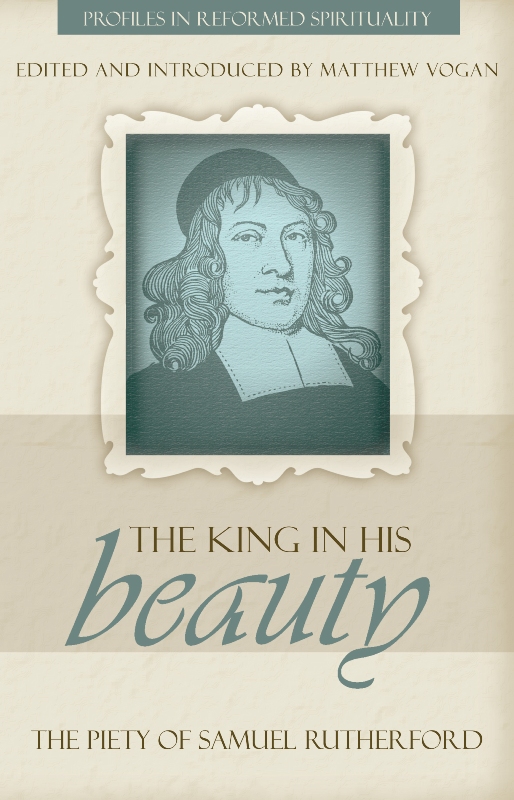
Some people have asked how it can be obtained in the UK. Evangelical Press released this for distribution in the UK in July this year. They have sold out and have a quantity of back orders. They are in the process of organising an order from the USA shortly and will take orders direct, although it doesn't appear to be on their website. It is generally retailing for £7.50.
Thursday, September 29, 2011
Questions we should not ask #4
We are not to ask such a question as that: “Wherefore have we fasted, and Thou hast not seen? Wherefore have we afflicted our soul, and Thou takest no knowledge?” (Isa. 58. 3). This is the language of the hypocrite and legalist, who hath an over-rating thought of all his duties: “Wherefore have we fasted, and Thou hast not seen? Wherefore have we prayed, and Thou hast not heard?” They challenge God of injustice, for not giving them what they think they merit. “I thank God,” said the Pharisee, “that I am not as other men, no adulterer, no murderer, nor like this publican; I fast twice a week, I give alms of all that I possess.” This was no prayer, but a proud boasting of what he had done for God, and what obligations he laid upon heaven. A poor believer is of another spirit; let him do never so much, he sees all his righteousness to be rotten rags, a menstruous cloth; my tears need to be washed in the blood of the Lamb.
Ralph Erskine
Ralph Erskine
Wednesday, September 21, 2011
that they may be with me where I am
"Father, I will that they also, whom thou hast given me, be with me where I am; that they may behold my glory" (John 17:24)
1. All the presence that Christ affords, and his people now enjoy here, is, in regard of this, but absence from the Lord: (2 Cor. 5:6,8). Perfect presence is, when all on both sides is present ; all of Christ, and all of the Christian. But now all of Christ is not with us ; and all of us is not with him...this presence is imperfect, and mixed with much distance and absence.
2. This being with Christ where he is, hath in it perfect and full fruition and enjoyment of Christ.
3. This presence, this enjoyment, is in the best state and place. It is where he is.
4. This is to be for ever. The greatest blessing hath the longest duration.
...Would you secure heaven to yourselves? Seek to get into Christ by faith; seek acquaintance with him, press after communion with him. Let all your thoughts of heaven, all your care to secure your possessing of it, and all your exercise in pressing towards it, let all centre in this one person, Jesus Christ ...You need no more to secure your right to eternal life, than to be possessed of Christ by faith; and you need no better eternal life, than to be with Christ where he is. He himself describes it by this that they may be with me where I am. And surely Christ best knows what heaven is ; since he bought it, prepared it, and possessed it, for his people. And he knows the way to it ; for he is both the way and the guide to it. Hear his voice, therefore, and follow and he will give you eternal life ; and ye shall never perish (John 10:27-29. Rom. 8:35-39).
Learn to pray moderately for the lives of Christ's people. There are some of the godly that are very useful by their gifts and grace; and, if spared, might be of great profit to the church of Christ. Such we should be loth to lose, and their lives we may pray for; yet it must be done moderately. Who can tell but Christ and we are praying counter to one another. He may be saying in heaven, "Father I will have such a one to be with me where I am;" and we saying on earth, " Lord we would have him to be with us where we are:" we saying, "We cannot spare him as yet;" and Christ saying, "I will be no longer without him." It is the force of this prayer of Christ, "I will have them to be with me where I am," that is the cause of the death of the godly. It is the force of this prayer that carries away so many of the saints in our day. Christ is saying in heaven, "I will have them where I am. They are despised in the world, and badly used on the earth: "Father, let us have them where we are." Should not we pray modestly for their lives, while we know not his secret will? and should not we believingly submit to his will, when he reveals it ? Say, "Let them go from us, since Christ calls them to be with him." It is his will, and their great advantage, (Phil. 1:23).
Robert Traill
"Help, LORD; for the godly man ceaseth; for the faithful fail from among the children of men". (Psalm 12:1)
1. All the presence that Christ affords, and his people now enjoy here, is, in regard of this, but absence from the Lord: (2 Cor. 5:6,8). Perfect presence is, when all on both sides is present ; all of Christ, and all of the Christian. But now all of Christ is not with us ; and all of us is not with him...this presence is imperfect, and mixed with much distance and absence.
2. This being with Christ where he is, hath in it perfect and full fruition and enjoyment of Christ.
3. This presence, this enjoyment, is in the best state and place. It is where he is.
4. This is to be for ever. The greatest blessing hath the longest duration.
...Would you secure heaven to yourselves? Seek to get into Christ by faith; seek acquaintance with him, press after communion with him. Let all your thoughts of heaven, all your care to secure your possessing of it, and all your exercise in pressing towards it, let all centre in this one person, Jesus Christ ...You need no more to secure your right to eternal life, than to be possessed of Christ by faith; and you need no better eternal life, than to be with Christ where he is. He himself describes it by this that they may be with me where I am. And surely Christ best knows what heaven is ; since he bought it, prepared it, and possessed it, for his people. And he knows the way to it ; for he is both the way and the guide to it. Hear his voice, therefore, and follow and he will give you eternal life ; and ye shall never perish (John 10:27-29. Rom. 8:35-39).
Learn to pray moderately for the lives of Christ's people. There are some of the godly that are very useful by their gifts and grace; and, if spared, might be of great profit to the church of Christ. Such we should be loth to lose, and their lives we may pray for; yet it must be done moderately. Who can tell but Christ and we are praying counter to one another. He may be saying in heaven, "Father I will have such a one to be with me where I am;" and we saying on earth, " Lord we would have him to be with us where we are:" we saying, "We cannot spare him as yet;" and Christ saying, "I will be no longer without him." It is the force of this prayer of Christ, "I will have them to be with me where I am," that is the cause of the death of the godly. It is the force of this prayer that carries away so many of the saints in our day. Christ is saying in heaven, "I will have them where I am. They are despised in the world, and badly used on the earth: "Father, let us have them where we are." Should not we pray modestly for their lives, while we know not his secret will? and should not we believingly submit to his will, when he reveals it ? Say, "Let them go from us, since Christ calls them to be with him." It is his will, and their great advantage, (Phil. 1:23).
Robert Traill
"Help, LORD; for the godly man ceaseth; for the faithful fail from among the children of men". (Psalm 12:1)
Tuesday, September 06, 2011
Questions we should not ask #3
We are not to ask such a question as that: “Can God furnish a table in the wilderness? Can He give us bread to eat? Can He provide flesh for His people?” (Psa. 78. 19). This is the question of unbelief, Can God provide supply for my temporal or spiritual necessities? Can He pardon such sins as mine? Can He subdue such corruptions as mine? Can He supply such wants as mine? “How can these things be?” O blasphemous unbelief! What cannot a God of infinite power do? This infidelity hath a mouth full of blasphemy. What answer gave God to this question to Israel? It is said, “The Lord heard this, and was wroth: so a fire was kindled against Jacob, and anger also came up against Israel; because they believed not in God, and trusted not in His salvation.”
- Ralph Erskine
- Ralph Erskine
Wednesday, August 31, 2011
Questions we should not ask #2
We are not to ask Him such a question as that: “Who shall ascend to heaven to bring down Christ? or, who shall descend into the depths to bring up Christ?” (Rom. 10:6, 7). We are discharged to say it in our hearts; and yet the heart is ready to say it when we are hearing the Word, and hearing Christ preached in it: O He is far away; He is in heaven; there is no winning to Him. Nay, but we are not to say so; for He is nigh when His Word is nigh. “He is in this Word of faith which we preach.” Now this Word, says the Holy Ghost, is even in our mouths,
and in our hearts. The Word is in our mouths, and when we find it there we should eat it. “Thy words were found, and I did eat them” (Jer. 15:16). And when the Word is in your mouth, Christ is there, and you should feed upon Him in the Word as well as in the sacrament. And as the Word is in your mouth, so it is in your heart that you may embrace Him.
Ralph Erskine
Saturday, August 27, 2011
the riots and moral relativism
The most insightful analysis of the causes of the recent English riots highlights the role of moral relativism. Encouragingly, this was shared by the Prime Minister. Even though he did not acknowledge where the absolutes would be derived. Another perspective is to see something of the symptoms that engulfed the declining Roman Empire as corroding the West into collapse. If we think this is melodramatic we might consider a decent summary of Gibbon's five basic reasons, as summarised by Tieman H. Dippel in The New Legacy:
- The sanctity and dignity of the home were undermined.
- Taxation became higher and higher, with public money being spent for free bread and circuses for the people.
- There was a mad craze for pleasure and violence, and sports became more exciting, brutal, and immoral as people grew increasingly desensitized.
- Armaments were built when the real enemy was the decay of individual responsibility.
- Religion degenerated into mere form and lost its touch with life and no longer had the power to guide people in spiritual directions.
Gibbon speaks generally of the decline in civic virtue as much as economic collapse. It appears that factors 2 and 3 were linked with the boredom of thousands of unemployed Romans who were prone to civil unrest and rioting in the streets. They were bought off by the politicians through free bread and circuses. A rather weak argument has been made that there is a link between the English riots and taxation, because some of the rioters thought they were "getting their taxes back" (even though it will put £100m on the tax bill).
Tuesday, August 23, 2011
Questions we should not ask #1
We are not to ask such a question as that: “How doth God know? and is there knowledge in the most High?” (Psa. 73. 11). Indeed, whenever you indulge yourselves in secret sins which you would not have the world to see, the language of your heart is, How does God know? But, He that made the eyes, shall He not see? He that gives man knowledge, shall He not know? Yea, His understanding is infinite. The Lord is the God of knowledge, and by Him actions are weighed. He searcheth Jerusalem as with a lighted candle. Do not question His omnisciency, for as He sees in secret to reward openly them that fear Him, so He sees in secret to punish openly them that fear Him not.
Ralph Erskine
Thursday, August 11, 2011
Greed runs riot: my part in it
There have been a multitude of causes proposed for the England riots There has been an inevitable left-wing counter-offensive against the simple assessment of the rioting and looting as feral criminality. It is a symptom of severe moral bankruptcy as a nation. It is easy and false to depersonalise the causes by blaming social and economic factors but it is also misleading and facile to isolate all of the responsibility with the individuals involved.

One of the proposed factors is the "culture of entitlement". David Wilson, professor of criminology at Birmingham City University and a former prison governor observes that:
"It's not just about a particular class, it permeates all levels of society. When we see politicians claiming for flat-screen TVs and getting jailed for fiddling their expenses, it's clear that young people of all classes aren't being given appropriate leadership."
We are speaking of a culture of greed where sin is unrestrained and breaches of the 10th commandment go happily hand in hand with the 8th - if you can get away with it. (The Larger Catechism rightly includes covetousness as a breach of the 8th commandment). Few will in fact face the consequences of this, just as few are brought to justice for their breaches of the 8th commandment. It's about getting what you want and feel entitled to for nothing whether it be significant sums of money or trainers from JD Sports. It is simply greed without fear of restraint from impotent and discredited authority. Government and society promote greed and the breach of the 8th commandment whether through the National Lottery or a dependence upon excessive and irresponsible consumer spending.
I'm not in the habit of quoting women priests but this writer has at least discerned some of this when she says:
"And what will we do? Continue to promulgate the values that have created this deadly cocktail of haves and have-nots, faithless, hopeless people who have been taught that consumerism is a recreational right and all moral and religious education completely nonsensical? Surely that would be nonsensical."
The question is: why is this happening now? Because it is evident to all that greed can run riot without being effectively checked. Politicians and bankers have proved this. "We're showing the police and the rich that we can what we want". I wonder where they learned that?
It comes closer to home in this analysis:
"Politicians have been part of this process, and some on the left may have even encouraged our young people to riot. The liberal intelligentsia encouraged posh kids to protest and riot over student fees – and now poorer kids have joined in and we are all appalled. How can you complain when you supported such activism only a few months ago?
In a way, we are all responsible for the riots, whether directly or indirectly. We watched the previous government talk up rights for young people but with no mention of responsibilities. We have allowed our welfare system to prop up immoral lifestyles. We have not taught all our young people that an entitlement culture is morally wrong. And we have paid the price for this liberalism. Now we need to collectively grow up and take responsibility for responsibility."
It's a start but if the soul-searching is at all real we need to discover "every man the plague of his own heart". That the seeds and a degree of the symptoms are with us too. "Are there not sins with you, even with you?" Though you were restrained by God's common and/or saving grace from joining with the looters, have we not had our own covetous part in the culture of greed? "When thou sawest a thief, then thou consentedst with him" (Ps. 50:18). Are we not seeing the full unrestrained working of what is in our hearts and even in our lives in the obsession with material things? Let us examine ourselves in relation to and pray over the biblical exposition of the 8th commandment that we have in the Larger Catechism
Question 141: What are the duties required in the eighth commandment?
Answer: The duties required in the eighth commandment are, truth, faithfulness, and justice in contracts and commerce between man and man; rendering to everyone his due; restitution of goods unlawfully detained from the right owners thereof; giving and lending freely, according to our abilities, and the necessities of others; moderation of our judgments, wills, and affections concerning worldly goods; a provident care and study to get, keep, use, and dispose these things which are necessary and convenient for the sustentation of our nature, and suitable to our condition; a lawful calling, and diligence in it; frugality; avoiding unnecessary lawsuits and suretyship, or other like engagements; and an endeavor, by all just and lawful means, to procure, preserve, and further the wealth and outward estate of others, as well as our own.
Question 142: What are the sins forbidden in the eighth commandment?
Answer: The sins forbidden in the eighth commandment, besides the neglect of the duties required, are, theft, robbery, man_stealing, and receiving anything that is stolen; fraudulent dealing, false weights and measures, removing land marks, injustice and unfaithfulness in contracts between man and man, or in matters of trust; oppression, extortion, usury, bribery, vexatious lawsuits, unjust enclosures and depopulations; engrossing commodities to enhance the price; unlawful callings, and all other unjust or sinful ways of taking or withholding from our neighbor: What belongs to him, or of enriching ourselves; covetousness; inordinate prizing and affecting worldly goods; distrustful and distracting cares and studies in getting, keeping, and using them; envying at the prosperity of others; as likewise idleness, prodigality, wasteful gaming; and all other ways whereby we do unduly prejudice our own outward estate, and defrauding ourselves of the due use and comfort of that estate which God has given us.
Wednesday, August 10, 2011
The Benefit of Meditation
From Virginia Hugenot
Joseph Hall, The Art of Divine Meditation in Works, Vol. 7, p. 44:
It is not, I suppose, a more bold than profitable labour, after the endeavours of so many contemplative men, to teach the Art of Meditation: a heavenly business, as any that belongeth either to man or Christian; and such as, whereby the soul doth unspeakably benefit itself. For, by this, do we ransack our deep and false hearts; find out our secret enemies; buckle with them, expel them; arm ourselves against their re-entrance: by this, we make use of all good means; fit ourselves to all good duties: by this, we descry our weakness; obtain redress; prevent temptations; cheer up our solitariness; temper our occasions of delight; get more light into our knowledge, more heat to our affections, more life to our devotion: by this, we grow to be, as we are, strangers upon the earth; and, our of a right estimation of all earthly things, into a sweet fruition of invisible comforts: by this, we see our Saviour, with Stephen; we talk with God, as Moses: and, by this, we are ravished, with blessed Paul, into paradise; and see that heaven, which we are loth to leave, which we cannot utter. This alone is the remedy of security and worldliness, the pastime of saints, the ladder of heaven; and, in short, the best improvement of Christianity. Lean it who can, and neglect it who list: he shall never find joy, neither in God nor in himself, which doth not both know and practise it.
Saturday, July 23, 2011
Mutilating the Old Testament
A bible burning event by an Anglican vicar in Wales reveals the logical conclusion of the Enlightenment biblical historical criticism. It also reveals the persistent anti-semitical streak of the higher criticism. The vicar justifies his action with a reference to a certain German philosopher. “Nietzsche said we should philosophise with a hammer, whereas I prefer to theologise with a scissors. I have not burnt a Bible, I have merely cut bits out and burned the little parts that were left over leaving most of the book intact.” The idea is to get rid of the parts of the Bible that represent a "cruel and vile God" and that supposedly contradict the teachings of Jesus. It's all a rehash of a very old heresy, Marcionism. Coming closer to home, we heard someone at the 2011 General Assembly asserting that certain parts of Leviticus had "never been part of the Word of God". The "moral" repugnance is thrown off onto the Jews.
How is historical criticism anti-Semitic? Try William Robertson Smith and his Lectures on the Religion of the Semites, whose major theme is in showing how different Christianity has always been from the lower ‘primitive’ 'ritualistic' Semitic religion out of which it emerged. Historical criticism is the application of an evolutionary 'scientific' method. Robertson Smith's mentor was Julius Wellhausen (inventor of the documentary hypothesis), whose anti-semitism has been discussed frequently. Johann David Michaelis defined the field of historical criticism and was virulently anti-semitic.
Solomon Schechter gave an address, “Higher Criticism—Higher Anti-Semitism” in 1903. Some warning signs had been raised. Clearly, however the intellectual climate was prepared for the rise of Hitler when Adolf von Harnack was ready to rehabilitate Marcion.
How is historical criticism anti-Semitic? Try William Robertson Smith and his Lectures on the Religion of the Semites, whose major theme is in showing how different Christianity has always been from the lower ‘primitive’ 'ritualistic' Semitic religion out of which it emerged. Historical criticism is the application of an evolutionary 'scientific' method. Robertson Smith's mentor was Julius Wellhausen (inventor of the documentary hypothesis), whose anti-semitism has been discussed frequently. Johann David Michaelis defined the field of historical criticism and was virulently anti-semitic.
Solomon Schechter gave an address, “Higher Criticism—Higher Anti-Semitism” in 1903. Some warning signs had been raised. Clearly, however the intellectual climate was prepared for the rise of Hitler when Adolf von Harnack was ready to rehabilitate Marcion.
Saturday, July 02, 2011
Volcanic Ash and the Balancings of the Clouds
The ash cloud from the Icelandic volcano Eyjafjallajökull in 2010 challenged scientific knowledge. While further understanding has been gathered, the recent eruption of Grimsvotn has revealed much of the lack of knowledge on the part of many about these things in spite of their claims. Now the Government has appointed an Ash Cloud Tsar, a scientist who is to give them the exact knowledge they need. There has been much debate about the computer forecasts of the ash cloud made by the Met Office’s Volcanic Advisory Centre. The computer model – called NAME – takes into account wind and rain patterns to predict the movement and concentration of the ash cloud up to altitudes of 55,000 feet. It also estimates the type of ash spewing out of the volcano in terms of the size, shape and hardness of volcanic ash particles.
In spring 2010 scientists conducted three flights into the Eyjafjallajökull volcanic ash cloud to collect air samples. They made new discoveries. 'Each volcano has its own character', they concluded. 'We found that hydrocarbon concentrations were up to 70% lower inside the Eyjafjallajökull ash cloud than outside.' They found that the ash plume contained not only the common volcanic gas sulfur dioxide, but also free chlorine radicals. Chlorine radicals are extremely reactive and even tiny amounts that can have a profound impact on local atmospheric chemistry. They are able to confirm that it was dangerous to attempt to fly through the cloud whereas at the time noone really knew for sure.
The media have referred foolishly to the forces of "mother nature" or being in "the lap of the gods" rather than acknowledge our helplessness, despite this knowledge, in response to divine providence. Those, such as ourselves, who found their travel plans affected by these work of providence should come to see our times are in his hands.
In the book of Job, Elihu asks, "Can any understand the spreadings of the clouds?" (Job 36:29). Elihu well knew something of their formation and composition. "He bindeth up the waters in his thick clouds, and the cloud is not rent under them" (Job 26:8). Yet he acknowledged the real limits of his knowledge. He asks does anyone fully know the "balancings of the clouds" (Job 37:16), how millions of tons of water are suspended and sustained in the thinnest parts of the atmosphere even though water is heavier than air. Air currents may keep them aloft for a while, but who controls and directs the wind? There may be various theories based on ever closer analysis but if we are wise we must come to acknowledge and bow to the providence of God.
“Hearken unto this, O Job: stand still and consider the wondrous works of God. Dost thou know when God disposed them [i.e., the winds and clouds, the thunder and lightning, the frost and rain], and caused the light of His cloud to shine? Dost thou know the balancing of the clouds, the wondrous works of Him who is perfect in knowledge” (Job 37:14-16).
"Touching the Almighty, we cannot find him out: he is excellent in power, and in judgment, and in plenty of justice: he will not afflict. Men do therefore fear him: he respecteth not any that are wise of heart" (Job 37:23-24). This is the lesson to be drawn from considering the mighty, wise and holy works of providence.
"Men should therefore stand in awe of him, and beware of quarrelling with his conduct, for he regards none who are wise in their own conceit, or who dare contend with their Maker, or presume to censure his proceedings." (John Brown of Haddington)
In spring 2010 scientists conducted three flights into the Eyjafjallajökull volcanic ash cloud to collect air samples. They made new discoveries. 'Each volcano has its own character', they concluded. 'We found that hydrocarbon concentrations were up to 70% lower inside the Eyjafjallajökull ash cloud than outside.' They found that the ash plume contained not only the common volcanic gas sulfur dioxide, but also free chlorine radicals. Chlorine radicals are extremely reactive and even tiny amounts that can have a profound impact on local atmospheric chemistry. They are able to confirm that it was dangerous to attempt to fly through the cloud whereas at the time noone really knew for sure.
The media have referred foolishly to the forces of "mother nature" or being in "the lap of the gods" rather than acknowledge our helplessness, despite this knowledge, in response to divine providence. Those, such as ourselves, who found their travel plans affected by these work of providence should come to see our times are in his hands.
In the book of Job, Elihu asks, "Can any understand the spreadings of the clouds?" (Job 36:29). Elihu well knew something of their formation and composition. "He bindeth up the waters in his thick clouds, and the cloud is not rent under them" (Job 26:8). Yet he acknowledged the real limits of his knowledge. He asks does anyone fully know the "balancings of the clouds" (Job 37:16), how millions of tons of water are suspended and sustained in the thinnest parts of the atmosphere even though water is heavier than air. Air currents may keep them aloft for a while, but who controls and directs the wind? There may be various theories based on ever closer analysis but if we are wise we must come to acknowledge and bow to the providence of God.
“Hearken unto this, O Job: stand still and consider the wondrous works of God. Dost thou know when God disposed them [i.e., the winds and clouds, the thunder and lightning, the frost and rain], and caused the light of His cloud to shine? Dost thou know the balancing of the clouds, the wondrous works of Him who is perfect in knowledge” (Job 37:14-16).
"Touching the Almighty, we cannot find him out: he is excellent in power, and in judgment, and in plenty of justice: he will not afflict. Men do therefore fear him: he respecteth not any that are wise of heart" (Job 37:23-24). This is the lesson to be drawn from considering the mighty, wise and holy works of providence.
"Men should therefore stand in awe of him, and beware of quarrelling with his conduct, for he regards none who are wise in their own conceit, or who dare contend with their Maker, or presume to censure his proceedings." (John Brown of Haddington)
Wednesday, June 22, 2011
Declaratory Acts
Another blog draws attention to the similarity between the praise controversy that has been ongoing within the Free Church lately and the Declaratory Act situation of 1892-3.
One of the points made is that in the Free Church lately there has been "surprising agreement that with Barrier Act legitimacy (however construed) the decision would be a binding law in the Free Church. This has always been the contention of the Free Presbyterian Church in connection with the Declaratory Act adopted in 1891 and made law under the Barrier Act in 1892".
The permission granted to consciences in 2011 to make known their convictions on purity of worship underlines many things. It underlines a situation where "every man does that which is right in his own eyes" and the Church is happy for vows and the definition of true and pure worship to be interpreted according to individual preference. It also acknowledges that the Church's position on worship has changed and in particular the vows of the individual and their meaning. Otherwise why would men need to seek to safeguard their consciences?
Merely to state one's convictions is on the face of it meaningless when this has no integral connection with the vows and it does not matter to the Church whether or not the statement is made. It does not absolve the individual from keeping the vows as the Church has altered them.
Men are now being required to assert, maintain and defend worship that previously their vows required them to oppose. It is no longer possible to assert, maintain and defend purity of worship in congregations that will reject purity of worship. While liberty will be granted to use purity of worship when conducting worship there, is there liberty to preach against the defection from purity of worship? Will this not be seen as schismatic and proceeded against? Will elders be able to protest against defections within their congregation?
When a man changes his views on worship this is entirely irrelevant to his presbytery now and even if the presbytery wished to take action, they cannot. A presbytery cannot require someone being licensed, ordained, inducted to make such a statement and even if they could they cannot act upon it. Thus their vows are now entirely changed.
A man may indicate that his views are conservative and receive a call but what if he omits to make a statement during the process of being inducted, has he changed his views? Could the congregation compel him to make such a statement? But what is the value of the statement? A man may make a statement and change his views not long after. No congregation can be guaranteed otherwise. After all, did not many make such statements and solemn vows but have then changed? A man may decide that he needs to stay in the current Free Church in order to preserve the truth in his own congregation. But what will happen after he is gone?
This brings us back to the point of agreement, that binding rules and constitutions may even if ultra vires, effectually change in practice and reality the meaning and force of one's vows. This is what happened in 1892-3, yet men sought to argue otherwise. One argument was that they were not required to preach heresy. The point was, however, that they had the keys of discipline taken away from them in relation to heresy and their ordination vows were meaningless on this point. Noone is now required to administer worship other than purity of worship but that does not mean that the vows have been altered.
James S. Sinclair commented in relation to the 1892 Act in words that are now very relevant:
"It is very apparent, however, to all observers that the present age is distinguished for great laxity of opinion on religious subjects in general, and that men, from lack of reverence to any authority in heaven or earth, but their own narrow reason, are ready to kick against all fixed doctrinal standards even though these should be clearly supported by the unerring Word of God".
One of the points made is that in the Free Church lately there has been "surprising agreement that with Barrier Act legitimacy (however construed) the decision would be a binding law in the Free Church. This has always been the contention of the Free Presbyterian Church in connection with the Declaratory Act adopted in 1891 and made law under the Barrier Act in 1892".
The permission granted to consciences in 2011 to make known their convictions on purity of worship underlines many things. It underlines a situation where "every man does that which is right in his own eyes" and the Church is happy for vows and the definition of true and pure worship to be interpreted according to individual preference. It also acknowledges that the Church's position on worship has changed and in particular the vows of the individual and their meaning. Otherwise why would men need to seek to safeguard their consciences?
Merely to state one's convictions is on the face of it meaningless when this has no integral connection with the vows and it does not matter to the Church whether or not the statement is made. It does not absolve the individual from keeping the vows as the Church has altered them.
Men are now being required to assert, maintain and defend worship that previously their vows required them to oppose. It is no longer possible to assert, maintain and defend purity of worship in congregations that will reject purity of worship. While liberty will be granted to use purity of worship when conducting worship there, is there liberty to preach against the defection from purity of worship? Will this not be seen as schismatic and proceeded against? Will elders be able to protest against defections within their congregation?
When a man changes his views on worship this is entirely irrelevant to his presbytery now and even if the presbytery wished to take action, they cannot. A presbytery cannot require someone being licensed, ordained, inducted to make such a statement and even if they could they cannot act upon it. Thus their vows are now entirely changed.
A man may indicate that his views are conservative and receive a call but what if he omits to make a statement during the process of being inducted, has he changed his views? Could the congregation compel him to make such a statement? But what is the value of the statement? A man may make a statement and change his views not long after. No congregation can be guaranteed otherwise. After all, did not many make such statements and solemn vows but have then changed? A man may decide that he needs to stay in the current Free Church in order to preserve the truth in his own congregation. But what will happen after he is gone?
This brings us back to the point of agreement, that binding rules and constitutions may even if ultra vires, effectually change in practice and reality the meaning and force of one's vows. This is what happened in 1892-3, yet men sought to argue otherwise. One argument was that they were not required to preach heresy. The point was, however, that they had the keys of discipline taken away from them in relation to heresy and their ordination vows were meaningless on this point. Noone is now required to administer worship other than purity of worship but that does not mean that the vows have been altered.
James S. Sinclair commented in relation to the 1892 Act in words that are now very relevant:
"It is very apparent, however, to all observers that the present age is distinguished for great laxity of opinion on religious subjects in general, and that men, from lack of reverence to any authority in heaven or earth, but their own narrow reason, are ready to kick against all fixed doctrinal standards even though these should be clearly supported by the unerring Word of God".
Tuesday, May 31, 2011
One of Heaven's Jewels: Rev Archibald Cook #2
The second edition of this unique book has now been produced following the success of the first edition. The second edition is largely the same as the first with minor differences. This site posted a review of the first edition which does not need to be repeated. The second edition can be purchased here.
It is certainly worth drawing attention to Cook and his ministry afresh, however. The question was put to Archibald Cook on one occasion, ‘Which do you fear most, that which has gone past in your life, or that which is to come?’ He replied that it was what was past in his life. He was asked, ‘Why is that so?’ ‘Well, I mean this,’ he said, ‘if what took place in the past was right, I fear not what will come after.’

The preface to the book makes reference to one minister who reads a portion of Cook's sermons every day. The author also makes the following summary of Cook's influence. "Perhaps his major long-term legacy to Highland Christianity is that he reinforced the evangelical idea that people claiming to have been born again in Christian religious conversion should give up some parts of their previous life-style, including secular entertainments". In the following extract from a sermon, Cook speaks of coming up out of the wilderness of this world and away from its attractions.
It is certainly worth drawing attention to Cook and his ministry afresh, however. The question was put to Archibald Cook on one occasion, ‘Which do you fear most, that which has gone past in your life, or that which is to come?’ He replied that it was what was past in his life. He was asked, ‘Why is that so?’ ‘Well, I mean this,’ he said, ‘if what took place in the past was right, I fear not what will come after.’
The preface to the book makes reference to one minister who reads a portion of Cook's sermons every day. The author also makes the following summary of Cook's influence. "Perhaps his major long-term legacy to Highland Christianity is that he reinforced the evangelical idea that people claiming to have been born again in Christian religious conversion should give up some parts of their previous life-style, including secular entertainments". In the following extract from a sermon, Cook speaks of coming up out of the wilderness of this world and away from its attractions.
The world is a wilderness literally, because it lost the beauty in which it was created. "Cursed is the ground for thy sake." God's curse wasted the original beauty of the earth. Again, the earth is a wilderness, because it is unable to satisfy the soul. The soul was created to be a dwelling place for God; and when God left the soul of man at the Fall nothing else could ever fill it. Because the Creator is robbed of the affection of the soul by the world, He is provoked to place a worm at the root of everything that is drawing the soul away from Himself. The Lord desires the soul's affection for Himself. When it is given to any creature and not to the Creator, He sees the extent to which He Himself is being despised in favour of that other object of affection. Even if it were to an angel that you would give your soul's affection you would thus be guilty of robbing God. When, for example, a man's worldly affairs prosper and take away his soul's affection from God, he is guilty of robbing God. Throughout eternity many will be cursing the day in which their worldly affairs began to prosper. You take care that the world does not draw your heart away from God.
...The world is a wilderness because it is under sentence of death. The day of judgement will usher in the end of the world. The sentence of death has been pronounced against it as a murderer. They are few in number whose souls are not being destroyed by the world. In the day that you come to a saving knowledge of God you will come to know that the world is a murderer, and in that day you will lose your love for it.
...In the day when the Lord comes into the soul, the world becomes an empty place it becomes a wilderness to that soul. Blessed is the man in whom this view of the world is maintained until the day of his death. In the day in which the Lord will come into your soul you will see no beauty in the creature but what is of God in it. This is what no hypocrite ever saw; but those who are the objects of God's love must see it, and do see it. Until they come to see this, any godliness they may have will be a half-grown godliness; and it is no wonder that they do not bear fruit. But when their eyes are opened they do not see any excellency in the world but what is of God in it. You who have not this view of the world, still have the world, and not God, as your portion.
Subscribe to:
Posts (Atom)

 Posts
Posts

