Showing posts with label Lord's Supper. Show all posts

Wednesday, October 23, 2013

Reformed consensus on 1 Cor 11:29 #2

Continuing from the previous post, we can demonstrate that the Westminster divines and a wide range of puritan authors held that 1 Cor 11:27, 29 and 32 indicate that unworthily partaking of the Supper would lead to chastisement but also damnation if not repented of.

In countering separatist arguments Samuel Rutherford said the following:
A worship corrupt by accident only through the fault of the worshipper, may and does make the Lord’s Supper damnation to the eater, and therefore the eater is forbidden so to eat. A worship in the matter and intrinsical principle unjust and sinful is defiled both to the man himself and to all that take part with him, as the teacher of false doctrine and all that hear and believe are defiled; but if the sin of an unworthy communicant even known to be so, is damnation to himself, and defiles the worship to others, then Paul would have said, he that eateth and drinketh unworthily, eateth and drinketh his own damnation, and the damnation of the whole church, and Paul should have forbidden all others to eat and drink withal, who communicates unworthily, if he allowed separation. But he says, he eateth and drinketh damnation to himself, not to others.
David Dickson in his Commentary on 1 Corinthians makes it clear that the punishment of eating unworthily is "judgement, or temporal and eternal punishment, unless hee repent".

Richard Vines was one of the leading Presbyterians at the Westminster Assembly. He published A Treatise of the Institution, Right Administration, and Receiving of the Sacrament of the Lords-Supper. In this he deals extensively with the latter part of 1 Cor 11. Alluding to 1 Cor 11:29 and speaking of how Chrysostom says that just as bodily food can aggravate a disease albeit not in itself so the Lord's Supper may be the cause of spiritual death to the partaker yet not in itself, he says, "He that eats and drinks unworthily, eats damnation, drinks damnation to himself...So this Sacrament received by wicked men, aggravates their condemnation, not of it self, but through their unrepented sins" (p69).
That the Apostle in setting home the sin and danger of eating and drinking unworthily, speaks thundring and lightning in very pertinent, but yet new and unusual phrases, which...have no brother in any other part of Scripture, as guilty of the body and blood of the Lord, eating or drinking judgement or damnation, etc. full of terrour, and fit for compunction (p179)
The sin of receiving unworthily is largely insisted on in the following part of this Chapter, where the aggravation of this sin is shown by the special guilt that attends it, and that is a guiltiness of the Lords Body; by the particular cause of this guiltiness, Not discerning the Lords Body, by the judgement that Follows upon it, damnation or punishment; by the way of prevention of the sin, the guilt and judgement, and that is Self-examination, and Self-judging (p198)
Vines speaks of the danger of this sin of unworthily partaking. "'He eats and drinks judgement to himself'if he be a godly man that eats and drinks unworthily, or haply also damnation, if he be an hypocrite, for the word krima, may respectively extend to both. A strange phrase it is to eat and drink judgement, but it is allusive...as sure as he eats of the Bread and drinks of the Cup unworthily, so sure is judgement to follow thereupon, or to accompany it, for he eats judgement, but it is to himself, not to others, except they be partakers in his sin, which may be divers ways (p385)

We might also refer to Thomas Vincent's Explication of the Shorter Catechism, officially commended by a large array of the most eminent Puritan ministers of the time.

Q. 11. What is the sin of unworthy receiving the Lord's supper?
A. The sin of unworthy receiving the Lord's supper is, that such are guilty of the body and blood of the Lord; that is, they are guilty of an affront and indignity which they offer to the Lord's body and blood. "Whosoever shall eat this bread, and drink this cup of the Lord unworthily, shall be guilty of the body and blood of the Lord."— 1 Cor. 11:27.

Q. 12. What is the danger of our unworthy receiving the Lord's supper?
A. The danger of our unworthy receiving the Lord's supper, is the eating and drinking judgment to ourselves; that is, provoking the Lord, by our unworthy receiving, to inflict temporal, spiritual, and eternal judgments upon us. "For he that eateth and drinketh unworthily, eateth and drinketh damnation to himself, not discerning the Lord's body. For this cause many are weak and sickly among you, and many sleep."— 1 Cor. 11:29, 30.

Likewise John Flavel:
Q. 10. What is the danger of coming to the Lord’s table without these graces?
A. The danger is exceeding great both to soul and body. (1.) To the soul; 1 Corinthians 11:29. For he that eateth and drinketh unworthily, eateth and drinketh damnation to himself, (2). And to the body; 1 Corinthians 11:30. For this cause many are weak and sickly among you, and many sleep.

Jonathan Edwards writes, “Those who contemptuously treat those symbols of the body of Christ slain and
His blood shed, why, they make themselves guilty of the body and blood of the Lord, that is, of murdering Him."

James Fisher comments:
Q. 27. What risk do they run who omit to examine themselves as to the above graces, before they come to the Lord's table?

A. They run the risk of coming unworthily.

Q. 28. What is it to come unworthily?

A. It is to come without any real sense, or consciousness of the need that we stand in of Christ, as "of God made unto us wisdom, righteousness, sanctification, and redemption," 1 Cor. 1:30.

Q. 29. What danger do they incur who thus come unworthily?

A. They eat and drink judgment to themselves, 1 Cor. 11:29.

Q. 30. In what sense can they who come unworthily, be said to eat and drink judgment to themselves?

A. In so far as by their eating and drinking unworthily, they do that which renders them obnoxious to the righteous judgment of God.

Q. 31. To what judgment do they render themselves obnoxious?

A. To temporal judgments, or afflictions of various kinds, in the present life; and to eternal judgment, or condemnation (if mercy prevent not) in the life to come, 1 Cor. 11:30, 32.

Joseph Woodward was a puritan minister in England settled at Dursley in Gloucestershire who declared his resolve to admit none to the Lord's Supper except those who had a credible profession.
A certain man obstinately said that he would not submit to examination and that if the minister would not give him the sacrament he would take it! In pursuance of this impious resolution, this man attended the church on sacrament day, but had scarcely set foot in the building before he fell dead, the Lord thus making clear to all the church members that the solemn admonitions addressed to the Church of the Corinthians by the apostle in the first Christian century were ageless in their solemn application.

The Reformed consensus on 1 Cor. 11:29

As we noticed in a previous post, the Westminster Assembly were very clear in their interpretation of 1 Corinthians 11:27, 29 and 32, i.e. that it includes the warning of damnation as well as chastisement. The Confession states: "Although ignorant and wicked men receive the outward elements in this sacrament; yet, they receive not the thing signified thereby; but, by their unworthy coming thereunto, are guilty of the body and blood of the Lord, to their own damnation."

We stressed that those who are not brought to repentance for partaking unworthily through chastisement are liable to damnation. In what follows we wish to make clear the Reformed consensus on 1 Corinthians 11:29, i.e. that it includes the warning of damnation as well as chastisement. This is the context for understanding the statement in the Confession and other relevant parts of the Standards. Without this context we will try to force the interpretation of the Confession to our own preferences rather than acknowledge the plain sense according to the original intent. While the interpretations of former times are determinative of the interpretation of Scripture we ought to have the humility to take seriously how the Spirit has illuminated men of old with greater godliness and understanding of the Scriptures.

It is interesting that John Calvin, in opposing paedocommunion, makes clear that he regards damnation as a potential consequence of receiving unworthily:
He does not admit all to partake of the Supper - but confines it to those who are fit to discern the body and blood of the Lord.... ‘He who eats and drinks unworthily, eats and drinks damnation to himself, not discerning the Lord’s body’ [First Corinthians 11:29].... Why should we offer poison - to our young children? 
The Form of Prayers and Ministration of the Sacraments, etc. Used in the English Congregation
at Geneva (1556) was used in Scotland following the Reformation. This makes very clear the same interpretation:
Therefore, whosoever shall eat this bread, and drink the cup of the Lord unworthily, he shall be guilty of the body and blood of the Lord. Then see that every man prove and try himself, and so let him eat of this bread and drink of this cup; for whosoever eateth or drinketh unworthily, he eateth and drinketh his own damnation, for not having due regard and consideration of the Lord's body.
so is the danger great if we receive the same unworthily, for then we are guilty of the body and blood of Christ our Saviour, we eat and drink our own damnation, not considering the Lord's body; we kindle God's wrath against us, and provoke him to plague us with diverse diseases and sundry kinds of death.
Without making a minute examination of every key document or key minister that we might we shall pass to consider the views of Robert Bruce from the generation immediately following the Reformation. During his five sermons on the Lord's Supper, Bruce refers to the warning of damnation on those receiving unworthily.
Therefore come not to the sacrament, except you bring both faith and obedience with you. If thou come not with a heart minded to obey Christ, at least more than thou wast wont to do, thou comest to thine own damnation. And if thou bringest a heart void of faith, thou comest to thine own damnation.
He then deals with an objection regarding damnation upon an unbeliever who receives the Lord's Supper. It was objected that since an unbeliever could not receive Christ in a spiritual manner, he was not eating and drinking unworthily, and not therefore guilty of the Body and Blood of Christ. Interestingly, Bruce makes it clear that it is the elements that are being eaten and drunk and therefore whether or not the body and blood of Christ is spiritually received, there is still guilt. "Yet theyare accounted guilty of the body and blood of the Son of God, because they refused Him".
For when they did eat that Bread and drink that Wine, if they had had faith, they might have eaten and drunk the flesh and blood of Christ Jesus. Now because thou refusest the body of Christ, thou contemnest His body; if thou have not an eye to discern and judge of His body that is offered thee. For if they had had faith, they might have seen His body offered with the Bread; by faith they might have taken and eaten that body. Therefore lacking their wedding garment, lacking faith whereby they should eat the body and drink the blood of Christ; lacking faith, which is the eye of the soul to perceive, and the mouth of the soul to receive that body which is spiritually offered ; they are counted guilty of the body and blood of Christ. 
if thou come as a swine or a dog to handle the seals of the body and blood of Christ...I say, mayest thou be reckoned guilty of His body and blood.

From Hebrews 6:6 and 10:29 he shows that these are not real believers but apostates who in their apostasy crucify Christ again and are so guilty of his body and blood.

The wicked cannot eat the body of Christ; but they may be guilty of it. The Apostle makes this more plain yet by another speech which I have aforetime handled from this place. In Heb. vi. 6, it is said that the apostates, they that make grievous defection, "crucify again to themselves the Son of God;" and their falling away makes them as guilty as they were who crucified Him. He is now in heaven, they cannot fetch Him from thence to crucify Him : yet the Apostle says they crucify Him. Why? Because their malice is as great as theirs that crucified Him ; so that if they had Him on the earth, they would do the like : therefore they are said to crucify the Son of God. Likewise in Heb. x. 29, there is another speech: the wicked are said to tread the Blood of Christ under their feet. Why? Because their malice is as great as theirs that trode upon His blood. They are accounted for this reason to be guilty of the body and blood of Christ, not because they eat His body, but because they refuse it, when they might have had it.  
Now the time remains yet, wherein we may have the body and blood of Christ. This time is very precious, and the dispensation of times is very secret and has its own bounds ; if you take not this time now, it will away. This time of grace and of that heavenly food has been dispensed to you very long: but how ye have profited, your life and behaviour testify. Remember, therefore, yourselves in time, and in time make use of it, for you know not how long it will last : crave a mouth to receive, as well the food of your soul that is offered, as the food of your bodies : and take this time while you may have it, or assuredly the time shall come, when you shall cry for it but shall not get it ; but in place of grace and mercy, shall come judgment, vengeance, and the dispensation of wrath.

In a further post we wish to make extensive reference to the Puritans on this topic, God Willing.


Friday, October 11, 2013

eating and drinking damnation

These words in 1 Cor 11:29 are very solemn, spoken as they are in connection with partaking of the Lord's Supper in an unworthy manner."For he that eateth and drinketh unworthily, eateth and drinketh damnation to himself, not discerning the Lord's body." Some object to this translation as too strong, and that krima, ought to be rendered condemnation or judgement in the sense of chastisement. Modern bible versions follow this preference.

The Westminster Confession follows this wording in Chapter 29:8. "Although ignorant and wicked men receive the outward elements in this sacrament: yet they receive not the thing signified thereby, but by their unworthy coming thereunto are guilty of the body and blood of the Lord to their own damnation. Wherefore, all ignorant and ungodly persons, as they are unfit to enjoy communion with Him, so are they unworthy of the Lord’s table; and cannot, without great sin against Christ while they remain such, partake of these holy mysteries, or be admitted thereunto".

Some believe that the Westminster Divines were referring here to unbelievers. This is not the case, however, they distinguish ignorant as well as wicked men. This does not absolutely define such as unbelieving, it refers to their fitness for this duty i.e. knowledge and discerning the Lord's body. We can see this by comparing with other uses of this verse in the Westminster Standards. In the Larger Catechism it refers to the ability to examine oneself in this matter.  Question 173: May any who profess the faith, and desire to come to the Lord’s Supper, be kept from it? Answer: Such as are found to be ignorant or scandalous, notwithstanding their profession of the faith, and desire to come to the Lord’s Supper, may and ought to be kept from that sacrament, by the power which Christ hath left in his church, until they receive instruction, and manifest their reformation (see also Q170, 171, 174 and 177 - Q112 indicates that it relates to the right use of the sacraments).

The Shorter Catechism asks:
Q. 97. What is required to the worthy receiving of the Lord’s supper?
A. It is required of them that would worthily partake of the Lord’s supper, that they examine themselves of their knowledge to discern the Lord’s body, of their faith to feed upon him, of their repentance, love, and new obedience; lest, coming unworthily, they eat and drink judgment to themselves.

The fact that the word judgement is used here as well as offered in the margin means that the words are interchangeable. The word damn in older usage could just mean to condemn someone for something as well as its most solemn meaning. Romans 14:23 in the AV is an example of this - they did not always use the word damn in its most solemn sense (it is likely that the use of the word in Rom 13:2 also carried a lesser connotation).

The truth is that being guilty of the body and blood of Christ may not be the unpardonable sin but if it is not repented of it does expose a person to damnation (John 19:11; Heb. 10:29). We are considering here the sin of blasphemy as the Divines themselves were keen to make clear in bringing in this consideration as part of the third commandment. Careless partaking through negligent preparation or the absence of such preparation altogether fails to distinguish between common bread and the sacramental bread, which represents the Lord's body; but treats it the same which is a contempt of Christ, his ordinance and his body and blood.

This is the blood that delivers the justified from damnation (Rom. 5:9). In 1 Cor 11:32 we understand that there is a divine purpose in chastisement in order that "we should not be condemned with the world". When someone eats and drinks unworthily then chastisement is necessary to bring them to repentance otherwise they would be condemned with the world through eating and drinking damnation to themselves. Even if we were simply to understand damnation as referring to objective guilt, that guilt must be repented of and removed and "every sin deserves God’s wrath and curse". What guilt are we speaking of? The guilt of the body and blood of the Lord, i.e. the worst sin ever committed and do we not think that Paul might mean that this objective guilt is unto damnation?

Do we understand "the guilt and heinousness of this sin"? John Willison defines this as "they are guilty of the body and blood of the Lord, i.e. It is an accession to the guilt of shedding the innocent blood of our Lord and Saviour Jesus Christ. — It is an implicit approbation of the Jews' act in crucifying Christ. — It is a trampling Christ's blood under our feet. — It is a crucifying Christ afresh and harbouring the traitors and enemies of Christ in our bosom".  "The sin of it is no less than murdering the Son of God, and being accessory to the guilt of shedding his innocent blood".

"It argues a low esteem and an undervaluing of Christ, his precious blood, and redeeming love...It is a solemn affront to Christ; as it is to a king to throw his picture or great seal into a puddle...It is a horrid mocking of Christ, as it is a pretense of love to him, and hatred of sin, while, in the mean time, sin is hugged and Christ despised...It is a plain accession to the guilt of the Jews and Romans, who imbrued their hands in Christ's blood; for he is reckoned accessory to a murder who consents to it, aids, or abets the murderers, and this unworthy communicants are guilty of".
"Unworthy receivers of the Lord's supper contract great guilt, and also incur great danger to themselves". 
"They provoke God to inflict sore judgments on them, temporal and spiritual judgments here, and eternal judgments hereafter. The meaning is not, that this sin is unpardonable, but that it deserves damnation, and will bring it on, without repentance, and flying to the blood of Christ for cleansing. Every sin is in its own nature damning, and therefore such a heinous sin, as profaning this holy ordinance, must surely be so. But timorous and fearful believers should not be discouraged from attending this holy ordinance by the sound of this word, as if they bound upon themselves the sentence of damnation, by coming to the Lord's table unprepared. For hearing and praying unworthily, incurs damnation, as well as communicating unworthily. But this sin, as well as others, leaves room for forgiveness upon repentance".
"as the virtue of this precious blood saved and cleansed many, who actually shed it at Jerusalem; so it can save and cleanse those who spill and trample it under foot in the sacrament, upon their application to it, (Luke 24:46-47; Acts 2:36,38,41; 1 John 1:7)"
In relation to the word chosen by the AV translators and the Westminster Divines, I am inclined to agree with a former Professor of Church History and Principles at the Free Church College who expressed his preference for the older rendering in the face of the criticism that is all too commonly heard.

We should not lose the significance of the rendering however, as it is drawn out by Willison and "be much concerned to guard against this heinous and dangerous sin; and cry with the Psalmist, 'Lord, deliver us from blood-guiltiness.'"

Saturday, July 06, 2013

breaking bread

It is good, though not always possible, to witness visibly the minister actually break the bread at the Lord's table. There is some historical and doctrinal significance to this - since it not only functioned as an obedience to the example of Christ but affirmed that Christ's presence was spiritual and not locally as a physical substance with, around, under or even within the bread. It seems that for this reason Lutherans, historically did not break the bread i.e. in order to signify that the substance of Christ was joined to the bread. As a side point it is worth noting that breaking of bread of bread in Scripture does not always or necessarily refer to the Lord's Supper (Acts 27:35 - it is debatable to what extent other uses of the term "breaking of bread" in the book of Acts refer to the Lord's Supper, Acts 2:46 is clearly common meals as per Luke 9:16; 24:30&35; Matt. 14:19; 15:36; Mark 6:41; 8:6,19; and Jeremiah 16:7). 

The apostle Paul asks: "The bread which we break, is it not the communion of the body of Christ?" (1 Cor 10:16). In other words, there is a greater spiritual significance to the bread and its being broken that we must enter into. If we would consider the bread that is set before us at the Lord's Table, John Willison reminds us that "Bread, ere it be fit to nourish us, must be first sown, and die in the earth; then it must be threshed, grinded in the mill, baken in the oven, broken and eaten: So Christ, that he might be a fit Saviour to us, was content to die, and be bruised for our sins, and scorched in the oven of his Father's wrath. Bread is the most necessary thing in the world; it strengthens man s heart, it is the staff that upholds his life; so Christ is the mercy of mercies, the most useful and necessary blessing to our starving souls".

He goes on: "When we see the minister take the bread, think how God did choose and take Christ from among men to be our Mediator, and a sacrifice for our sins. When the minister sets apart, blesses, and consecrates the bread, think how God set apart and sent his Son, sanctified and furnished with all gifts and graces needful to his mediatory office".

When you see the bread broken, think on the breaking and tormenting of Christ s body, and the bruising of his soul for our sins. He suffered a double death, one in his soul, and another in his body; he suffered from men and devils: But all was nothing to what he suffered from his Father; for, when men were wounding his body, the Father s hand bruised his soul, made a thousand wounds therein, and poured in a whole ocean of wrath upon him: he brake him with breach upon breach, and overwhelmed him with one wave of vengeance upon the back of another, till all his billows went over him. This was a sad time to our Saviour: yet all these floods could not drown his love to us, nor make him quit the grip he had taken of us, but, come of him what will, his poor people must not perish; his love to them flamed highest when his sufferings were greatest. 
Again, when you see the bread broken, look to Christ's wounds as an open city of refuge for thy soul, that is pursued by justice, to take sanctuary in: His wounds are laid open, that you may see into his bleeding heart, and see his yearning bowels of mercy, and hear them sounding towards you, an object of pity and spectacle of misery. Poor shelterless soul, quit all other shelters, and flee to the clefts of the rock here opened, saying, "This is my rest, and here I will stay." 
Pray at this time, "Lord, may my hard heart be broken and melted, that I may in some measure be conformed to my broken Saviour" Or, "Lord, break the united forces of my sins, and scatter them by thy mighty arm."
When you see the minister offering the bread to the communicants, and hear him saying, "Take ye, eat ye," think how freely God offers his Son, and Christ offers himself to be ours: Think how you see him at the head of the table, making offer of himself to you, saying, "Take me, and the whole purchase of my blood; take my sealed testament, and all the legacies in it; take a sealed pardon of all your sins, and a sealed right to eternal life."

Tuesday, June 25, 2013

Preparation for the Lord's Supper

In many churches the Lord's Supper is administered without any acknowledged need for due spiritual preparation for this means of grace. The Puritan Richard Vines gives some indications as to the necessity of spiritual preparation.

There is a certain peculiar preparation due to the celebration of this Ordinance; for where the manner is so contrary, as worthily and unworthily, and the effect of the Ordinance much depending upon the manner of receiving it, and the benefits so great, as communion of Christ's body, the danger no less than of condemnation, reason will tell us, that there is a preparation requisite, that the fruit may be of the Tree of Life, and not of the Tree of knowledge of good and eyil, Eat and die. It's either too much blindness or boldness to rush upon this Ordinance without preparation...Our Saviour did not only use, but honour preparations, when he fasted and pray'd in order to his great work. To the Passover there belong'd...a solemn preparation: The Lamb was taken upon the tenth day, the leaven was enquired after and purged out which if they have now no obligation, yet they have a meaning: and you use to have Sermons for preparation, which are but preparatives to preparation they do but light the candle, but you must, as that woman, Luke 15:8 "Sweep the house and seek diligently"; else Sermon preparation may (as I fear it often doth) go without soul-preparation. That word 1 Cor. 11:28 "And so let him eat", tells us plainly, that somewhat must go before. 

Preparation is not something that we may trust in and though we must take it seriously and engage in it with sincerity we must take ourselves to Christ by faith and only go to the Lord's Table in his strength and merit.
I look for no preparation that shall not stand in need of mercy. If I see so much in my self, as makes my self empty, and that emptiness doth make me athirst for Christ, then I shall not dispute my preparation, but deny my worthiness, and yet come.

Wednesday, February 02, 2011

Open Communion

Sometimes one comes across inferences that the FP Church practices closed (as opposed to restricted) communion. Closed communion means that no one outwith that denomination or congregation can be admitted to the Lord's Supper. The following longstanding Synod resolution gives the accurate statement of the position:

"The Synod would record their strong disapprobation of the conduct of some individuals connected with this Church, who have circulated unfounded charges among our people about the meaning of a resolution passed by the Synod in November last year. The resolution reads follows—"That the Synod approve of the procedure adopted by Mr Macintyre at Winnipeg in the matter or admitting persons to the privilege of the communion, and give it to be understood that, while this Church does not hold close communion, none are to be admitted to the privilege mentioned but such as are known as God-fearing persons by a majority of those who are responsible for admission." The Synod declare that the meaning attached by them to the above resolution is as follows- 1) The office-bearers of the Church in Canada, having sent a request to the Synod to give a deliverance in regard to the position held by this Church about communion, the Synod gave it to be understood that neither the Church of the Reformation, or the Fire Presbyterian Church of Scotland, held or hold close communion; 2) The Synod gave it to be understood that none are to be received to the Lord's table in this Church 'but such as are God-fearing persons'; and that none shall be admitted without the approval of the majority of the Kirk Session. That this has been all along the way of admission to the Lord's Table in the Free Presbyterian Church will be quite manifest to all their people. 3)The Synod would also declare that it flows from ignorance or something more blameworthy on the part of some, to have spread a report to the effect that the Synod, by foresaid resolution, had changed the Constitution of the Church and opened a wide door to receive members wholesale from other Churches to the Lord's table. The people of this Church may rest assured that the Synod did not and does not intend to open the door to communion in the least degree wider than it has been in the Reformed Church of Scotland since the Reformation, and in the Free Presbyterian Church of Scotland hitherto."

Thursday, February 25, 2010

Calvin on who should be kept from the Lord's Supper and why

From: Calvin's Ecclesiastical Advice
Calvin's "Essay on the Lord's Supper" from, The Form of Prayers, 1542 and 1545.

The Eucharist is the communion of the body and blood of the Lord. As St. Paul explains, it ought to be taken in order that we might abide and live more fully in Christ and he might live and abide more fully in us. For this reason St. Paul stresses that in the celebration of the Holy Supper we ought increasingly to desire to live and abide in Christ (i.e., to eat the flesh and drink the blood of the Lord) and to receive this meat and drink with greater fruitfulness and religious fervor. Hence, it is necessary to institute and to control this sacrament in order that the people might be duly instructed and admonished as to the necessity of their frequent participation in the flesh and blood of the Lord as well as to its great benefits, which are received from this participation and mastication.

From this it follows, first, that the Supper ought only to be offered to those who are willing and able to live in the Lord, who have him living in them, and who desire that his life be increased and made greater in them. For the reason why the communion of the body and blood of Christ is given in the Holy Supper is to the end that we might live entirely in him and he in us. Consequently, it is necessary for God's faithful ministerial dispensers to know that those to whom they wish to give the Lord's Supper are already incorporated by baptism into the Lord Christ, knowing that they are his true and living members, and that they hunger for this meat of eternal life and thirst for this holy drink. Christian charity, religion, and holy administration have always required this. Other persons, because they cannot participate in the sacrament without condemning themselves, must be kept away from the Holy Supper by the deacon (as the early church commanded). This is true also for those who have not yet been fully instructed in the Christian religion, the wicked, and those who have had to leave the church and who should be making penance, but who have not yet been received in grace. For this reason our Lord himself gave the first supper only to those more elect disciples. It is not fitting to give what is holy to dogs nor to give the meat of eternal life to those who do not hunger for it.

Therefore the Lord's Supper should only be given to those who are known and approved by the rule of charity and religion, a rule which must be practiced in the administration of the Supper, also requiring confession and the acknowledgment that, in our life, nothing contradicts it. Ministers, therefore, act in a holy and correct manner, both by their ministry and by its dignity, when they receive only those persons to the sacrament whom they first of all know to be approved and instructed. Moreover, since this meat and drink of eternal life ought to be administered only to those who truly desire it, it follows that the people to whom the Supper is administered should be admonished so thoroughly as to understand how important it is for them to profit from communion with Christ and what benefits are offered in it to them.

Translated by: Mary Beaty and Benjamin W. Farley
T&T CLARK, EDINBURGH

Friday, October 23, 2009

Why do the elders interview intending communicants?

Elders must interview intending communicants if they are to discharge their responsibilities faithfully. The individual has their responsibility "Let a man examine himself". The Lord's Supper is not an individual activity but a communion, however, with the communicant membership of a particular congregation amongst others. The Lord's Supper is a seal of the covenant of grace and a seal of church membership and of church privileges. It is a pledge of the fullest communion in God’s visible covenant society upon earth. The elders of that congregation have a duty both to Christ as head of the Church and to the souls of those over which they have oversight. 2 Tim. 4:2 "Preach the word; be instant in season, out of season; reprove, rebuke, exhort, with all long-suffering and doctrine. Titus 2:15 'These things speak, and exhort, and rebuke with all authority. Let no man despise thee. 1 Cor. 5:12 'For what have I to do to judge them also that are without? do not ye judge them that are within? Heb. 13:17 'Obey them that nave the rule over you, and submit yourselves: for they watch for your souls, as they that must give account; that they may do it with joy, and not with grief: for that is unprofitable for you'.

Elders have been set in the Church together with minister for the purpose of the edification of the body and to bring all to a maturity of faith (Eph 4:11-13). Ministers are elders (Titus 1:7, 1 Cor 4:1-2) are called 'the steward of God', particularly stewards of the mysteries of God, who are required to be found faithful.

The elders are to watch over the Church "Take heed therefore unto yourselves, and to all the flock, over which the Holy Ghost hath made you overseers, to feed the church of God, which He hath purchased with His own blood." There is a duty to be strictly attentive, active and cautious in this responsibility [Acts 20:17, 28-31]. The elders must only admit those who publicly profess faith in Christ and who live in conformity to that profession (Titus 1:16, Matthew 7:21). They are like the porters under the Old Testament, (2 Chron. 23:19) 'And he set the porters at the gates of the house of the Lord, that none which was unclean in any thing should enter in'.

Christ has given to these officers the keys of the kingdom (Matt. 16:19; 18:17-18; Jn. 20:21-23; 2 Cor. 2:6-8). "Whatsoever ye shall bind on earth, shall be bound in heaven: and whatsoever ye shall loose on earth, shall be loosed in heaven." [Matt. 18.18], note that this is addressed in the plural (ye, you). The Westminster Confession asserts that elders exercise the keys of the kingdom: “To these officers the keys of the kingdom of heaven are committed, by virtue whereof they have power respectively to retain and remit sins, to shut that kingdom against the impenitent, both by the word and censures; and to open it unto penitent sinners, by the ministry of the gospel, and by absolution from censures, as occasion shall require".

I Cor 5:1-8 shows that the Lord's Supper is the New Testament Passover and that the Church is to purged of the 'leaven' of hypocrisy in order to maintain the true witness and profession of the Church. As they sit at the Lord's table they are to "keep the feast", the feast in the New Testament sense, purely and in sincerity "not with old leaven, neither with the leaven of malice and wickedness, but with the unleavened bread of sincerity and truth". Paul condemned them in verse 2 for keeping the man in its fellowship and allowing him to come to the communion table. [1 Cor. 5:2].

With a view to celebrating the Lord’s Supper properly, the Kirk Session at Corinth was to constitute itself into a court of Christ's Church, in the name and by the authority of the Lord Jesus Christ, and "purge out the old leaven", so that they might partake of this holy sacrament in an acceptable manner. "Your glorying is not good. Know ye not that a little leaven leaveneth the whole lump? Purge out therefore the old leaven, that ye may be a new lump, as ye are unleavened. For even Christ our passover is sacrificed for us:" [1 Corinthians 5:6-7]. Other relevant portions are:
2 Cor. 10. 8. "Our authority which the Lord hath given us for edification".
1 Thess 5. 21. "Prove all things: Hold fast that which is good."

If the elders have received the keys from Christ they must be very careful to open the door of admission only to those whom Christ would have them admit. They are to look for an accredited profession of faith. There are three dimensions to Christian profession: doctrine, duty and experience. These dimensions are also necessary to communion with Christ JN 14:21 "He that hath my commandments [doctrine], and keepeth them [duty], he it is that loveth me: and he that loveth me shall be loved of my Father, and I will love him, and will manifest myself to him [experience]." These are those "that join themselves to the LORD, to serve him, and to love the name of the LORD" IS56:6. This faith, love and obedience needs to be tested in an objective manner however, if a court of the church is to admit individuals to the privilege of this sacrament. They cannot, however, know the secret state of anyone's soul and they can only assess the evidence of the outward profession and consistent conduct of the person applying to be received as a communicant (Acts 19:18).

Why do sessions interview candidates and not just issue a verbal warning from the pulpit?
[1] Reliance on the word of warning from the pulpit alone fails because it introduces a more stringent standard for admission to baptism than the Lord's Supper. Before a person is allowed to present himself, or his children, for baptism, he must satisfy the Session as to his profession and life. If there is only a verbal warning in the case of the Lord's Supper, however, the candidate is only asked to examine himself before he is allowed to come to the Lord’s Table - this is inconsistent.
[2] If we rely upon a word of warning from the pulpit alone, we are dangerously assuming sufficient competence to judge spiritual matters on the part of those who may be complete strangers. Sessions must assume the opposite, unless-and until-they have obtained adequate information. Many people who say that they are Christians are profoundly ignorant of what that really means.
[3] A mere verbal warning does not deal with the problem of those who are under discipline from other churches if it is left up to the individual to judge his own case. It does not do justice to the sinful propensities of men, or to the seriousness of church censures.
[4] There is such a thing as corporate responsibility. Many people belong to Churches that will not submit to the Word of God but rather reject it. There are also Churches that do not administer the sacraments as appointed by Christ in His Word, but add to and take from them. They do not emphasise the need for holy living according to the Word of God. These individuals think that this has nothing to do with their own personal faith. This needs to be vitally addressed. Only examination by elders will achieve this.
[5] People need their errors pointed out - it is no kindness to ignore them.
[6] In the best days of the Church admission to the table was viewed as proper only when the elders had sufficient knowledge of the communicants to judge them to be worthy receivers. If persons are admitted of whom the Session know nothing it cannot be reconciled with the clearly stated requirement of the Westminster Confession which says:
...ignorant and ungodly persons, as they are unfit to enjoy communion with [Christ], so are they unworthy of the Lord’s table; and cannot, without great sin against Christ, while they remain such, partake of these holy mysteries, or be admitted thereunto. [Note that people must be admitted they cannot admit themselves]
Larger Catechism Answer [WLC 173] 'May any who profess the faith, and desire to come to the Lord's supper, be kept from it?'
'Such as are found to be ignorant or scandalous, notwithstanding their profession of the faith, and desire to come to the Lord's Supper, may and ought to be kept from that sacrament, by the power which Christ has left in his church, until they receive instruction, and manifest their reformation'.
[7] Examination by the elders means that people are brought to face the seriousness of what it means to partake of the Lord’s table.
[8] The table was fenced in this way in the Early Church:
Justin [c.150 AD]:
And this food is called among us [the Eucharist], of which no one is allowed to partake but the man who believes that the things which we teach are true, and who has been washed with the washing that is for the remission of sins, and unto regeneration, and who is so living as Christ has enjoined. [Apology I LXVI]
The requirements of the church of 150 AD were 1] believe the teachings of the church [2] baptism and [3] godly life. The Didache Didache [c.120AD?] also says "But let not any one who hath a quarrel with his companion join with you, until they be reconciled, that your sacrifice may not be polluted". [14:2]
[9] It was also fenced from the Reformation onwards. Knox's Book of Common Order, adopted in Scotland in 1564: "The administration of the Table ought never to be without examination pass before, especially of those whose knowledge is suspect. We think that none are apt to be admitted to that Mystery, who cannot formally say the Lord's Prayer, The Articles of the Belief, and declare the sum of the Law." Knox goes on to say: "And therefore of necessity we judge it, that every year at least, public examination be had by the Ministers and Elders of the knowledge of every person within the church; to wit, that every master and mistress of household come to maturity, before the Ministers and Elders, to give confession of their faith, and to answer such chief points of Religion as the Ministers shall demand"
[10] As in all things in the Church, cursed be he that doeth the work of the Lord negligently. The elders must not follow convenience but the injunction: "Let all things be done decently and in order" [1 Cor. 14:40].

Friday, August 21, 2009

the Lord's Supper in Scottish Presbyterianism

This book review is posted at www.middletome.com
The Lord's Supper
Malcolm Maclean

272pp paperback
Isbn 13: 9781845504281 £10.99, 2009 Christian Focus Publications Mentor

This book has definite value in its thorough treatment of the theology and practice of the Lord's Supper in Scottish Presbyterianism. This part of the book begins with a good treatment of the Reformed understanding of the Lord's Supper. There follows an account of the way that Communion seasons developed in the Lowlands from the time of the Reformation. The theology of the Lord's Supper in the Lowlands is outlined using the Scots Confession and Westminster Confession and a range of authors such as James Durham, Robert Bruce, Thomas Boston, John Willison and John Brown of Haddington. Several other less well known authors are introduced. This is a very helpful section which traces common emphases and notes practical instruction. The practice of the Lord's Supper in the Highlands is then taken up. There is undoubtedly a distinctiveness to Highland communion seasons but in reality the elements were all present in Lowland communion seasons also. Even the fellowship meeting is only a more formalised version of Lowland precedent. Rather than a chapter on the Highland theology of the Lord's Supper as one might expect, the chapter that follows is called Features of Highland Communion seasons. This is disappointing because there is sufficient material in John Kennedy of Dingwall's writing to follow this out. We believe that there was a distinctive theological contribution to the understanding of the sacraments in the
way that Kennedy explains the different nature, purpose and meaning of the two sacraments.


While certain features of the Highland practice are commended as positive, this section is more critical than the chapter on the Lowlands of various aspects. The substance of this is the lack of assurance found among Highland Christians. He focuses upon Kennedy's discussion of this in the Days of the Fathers in Rosshire and notes that Kennedy's doctrine of assurance is entirely the same as that of the Westminster Confession. Kennedy connected the issue of assurance to the fact that in the Lowlands the same requirements applied to those receiving either sacrament whilst there was a difference in the Highlands. We do not feel that this section is conclusive in dealing with this complex subject. Maclean says that Kennedy does not acknowledge that both views might be wrong but it is not quite clear what other views are possible in the context of the Westminster doctrine of the sacraments. Maclean then notes the decline in the communion season in the Highlands which is really the same as marking the decline in Highland presbyterianism. He seems to feel that the loss is not significant and that such seasons cannot be sustained due to changes in society. He then wishes to contextualise rather than preserve certain aspects of the Highland communion season.

We have focussed on the substance of the book in order to commend it. There is, however, some other material surrounding it. An introductory section gives a brief overview of the passages that deal with the Lord's Supper in the New Testament. The chapters which follow the historical study deal with miscellaneous practical and theological aspects of the Lord's Supper today such as pastoral and personal preparation, liturgy, the role of the Holy Spirit and the Lord's Supper and children (where a fuller rebuttal of paedocommunion would have been helpful). Some of these sections are rather brief to do the subject justice. The historical treatment accounts for 70% of the substance of the book and we wonder whether it would have been better to focus upon this alone which might have avoided a little unevenness. More space could then have been given to the historical study and appropriate observations.

Malcolm Maclean is very candid about the views and experience that he brings to the writing of this book. 'This book is an expression of my search for my spiritual roots'. He refers to his upbringing in Inverness Free Presbyterian Church of Scotland. 'I can still recall the sense of reverence for God and the awareness of his presence that characterised the occasions when the Lord's Supper was held in the congregation that my parents attended when I was young'. He describes the fact that the way these occasions were conducted 'was in line with the traditional practices associated with Scottish Highland communion seasons'. He was converted, however, through the witness of the Brethren and became a member in their Assembly. This brought an entirely different practice of the Lord's Supper. Maclean feels that there is a tendency to shift the focus from Christ to the believer in our approach to the Supper. This of course must never happen. There is a danger, however, that those who perceive a distraction from Christ in thorough, genuine and scriptural self-examination may, in seeking to redress this, undermine true communion with Christ. As the Song of Solomon shows, the communion between Christ and His Church consists in and depends upon seeking the exercise of grace in the means of grace through Christ and His Spirit.

While these observations are necessary, the book is extremely valuable in the diligent historical review it presents, especially in bringing new sources and material into view. It is vital that we have the right understanding and approach to the Lord's Supper and, in highlighting the theology and practice of Scottish Presbyterianism, this book helps us toward that.

Monday, June 08, 2009

getting Christ better

It is reasonably well known that Robert Bruce, the Scottish minister of the second generation of Reformers, emphasised that grace received through the sacraments is not different from that received through the Word. Both convey the same Christ. But as he went on to assert that while we do not get a better Christ in the sacraments than we do in the Word, there are times when we get Christ better. He said "we get Christ better nor we did before; Aye get the thing that we gat mair fullie, that is, with a surer apprehension nor we had of before; we get a better grip of Christ now: For be the sacrament my faith is nurished, the bounds of my saull is enlarged, and sa, quhere I had but a little grip of Christ before, as it were betwixt my finger and my thumbe, now 1 get him in my haill hande; and ay the mair that my faith growes, the better grip I get of Christ lesus. Sa the sacrament is felloun necessarie, an it were na mair but to get Christ better, and to get a faster apprehension of him be the sacrament nor we coidd have of before". Bruce spoke of it as leading to 'growth of faith and increase of holiness', so that the believer might say 'the bounds of my soul are inlarged... I grow in knowledge. I grow in apprehension. I grow in feeling... He changes the affections of my soul. He changes their faculties and qualities. Hearts and mind not changed in substance - but made new to the extent that we are new creatures.' 'Christ works in you a spiritual feeling', said Bruce, 'that in your heart and in your conscience you may fmd the effect of his Word.' The effect of having such new feelings is that the believer might obtain 'strength' to 'lay hold of mercy' and obtain 'strong resolve for bettering the self'. In the words of Bruce, 'there is no other lesson in Christianity than this - to shake off your lusts and affections more and more to renounce yourself, so that you may embrace Christ.'

George Gillespie explained this further in writing that believers are given the body and blood of Christ through preaching also, but in preaching there was
more 'human wisdom' mixed in, so it was not so 'pure' as the sacrament.'

In the words of the Scots Confession, 'The faithful in the right use of the Lord's table have sic a conjunction with the Lord Jesus Christ as the natural man cannot comprehend.'

Saturday, October 11, 2008

The antitype: Bitter herbs and unleavened bread

There is an excellent resource at www.puritanlibrary.com. This indexes puritan resources available on Google Books. The whole works of Ussher, Isaac Ambrose and the most well-known puritans are here together with links to dedicated websites and scholars.
One of the most interesting resources to me is the A Treatise of the Institution, Right Administration and Receiving of the Sacrament of the Lords Supper: Delivered in XX Sermons at St. Laurence-Jury, London by the Westminster Divine Richard Vines. This was popular with people in Scotland in the eighteenth century particularly at the Cambuslang revival.

It appears that a part of the treatise was lost but in Providence then restored to the author and so was able to be printed. Vines begins by demonstrating how Christ is the anti-type of the paschal lamb and the connection between the Passover and the Lord's Supper. "The Apostle interprets leven, malice and wickedness, unlevened bread, fincerity and truth, I Cor. 5. 8. and so it teaches us, how Christ is to be received by us, and what manner of perfons they must be that apply and receive Jesus Christ. They must remember their bondage under fin, not with delight, but bitterness, and feel the sour taste of their former ways, as sinners contrite and broken bitter herbs are good sauce for the Paschal Lamb sin felt sets an edge on the stomach as Vinegar. Chrift relishes well to such a soul; when thou comest to eat his Supper, bring thy own sauce with thee, bitter herbs, and refresh on thy self the memory of thy old ways and former lufts; that's the sauce, the bread is unlevened bread, you cannot eat the Lamb and leven together: a secure hypocrite, a filthy swine not purged from sin, to think to have Christ and his sin too, to be pardoned and not purged, to be saved and not sanctified. Away, and never think to eat this Lamb with leven'd bread come with bitter herbs them mayest, contrition for sin, but come not with and in thy sins, for that's eating with levened bread; therefore search it out, and let thy sins be searcht out as with a candle, and let them be execrable to thee, that God may see thy hatred of them, and thy loathing of thy self for them".

Vines is also excellent on what it is to eat and drink worthily and unworthily.

Thursday, March 06, 2008

What is Communicating Unworthily?

An excerpt from a sermon by Thomas Boston

The way that many mar this duty: they do it unworthily, that is unsuitably, unmeetly; they mar it in the making, not going about it in the right way and manner. They are guests, but not meet guests, for the holy table. They come to the marriage-feast, but not with wedding-garments. 

What comes of it. The consequences are dreadful. They eat and drink damnation [Greek: judgment] to themselves. This judgment to some is temporal, to others eternal. This they are said to eat and drink to themselves; it becomes poison to them, and so they take their death with their own hands. While the meat is in their mouth, wrath goes down with it, as the devil did with Judas’ sop. 

A particular sin lying on them, which provokes God so to treat them: they do not discern the body of the Lord Christ; they do not duly consider the relation betwixt the elements and Christ, and so they rush in upon these creatures of bread and wine, that are of so deep a sanctification as to be the symbols of the body and blood of the Son of God; they sit down at that table, as to their ordinary meals, without that reverence and devotion that ought to be in those who sit down at such a holy table.  

1. People communicate unworthily when they have not an honourable respect for, and a due reverence to, this ordinance, when they partake of it, Mal. 1:6, 7. If it bear the stamp of divine authority, is it meet that persons should despise it, and not be touched with reverence of it? When the angel of the covenant appeared to Moses in the bush, he said to him, “Put off thy shoes from off thy feet; for the place whereon thou standest is holy ground,” Exod. 3:5. But, behold in this sacrament there are bread and wine of deeper sanctification than that holy ground, they being the symbols of Christ’s body and blood. 

2. When people do not go about it out of respect to the command of Christ, may he not justly astonish such at his table with that question, “If I be a master, where is my fear?” Mal. 1:6. Is it meet that people should communicate out of custom, vain-glory, &c.? If the sense of his command do not bring thee there, thou canst not expect the sense of his love, but rather to feel the weight of his hand, when there. As we must believe the truth because God has said it, otherwise our assent is not divine faith; so we must do our duty because God has commanded it, otherwise our obedience is not acceptable to him. 

3. When people look to any other quarter than to Christ for the good of the sacrament. Some look no farther than the elements. This is to put them in Christ’s stead: but be not deceived, bread and wine cannot nourish thy soul. Some are apt to look to ministers: and if such a one as they affect, serve the table they are at, they think they are sure of advantage. If they knew your hearts so led aside, they would, with a sad heart and angry countenance, say to you, as Jacob did to Rachel, “Am I in God’s stead?” Gen. 30:2. The spouse went a little further than the watchmen before she found her beloved, Cant. 3:4. Many smart by this respecting particular ministers, and overlooking the Master of this ordinance. Secondly, Consider the time of the institution: “The same night in which he was betrayed by Judas, when the hour and power of darkness was approaching.” If so, then it appears that this sacrament was left us as a token by our dying friend. He was now to go out of the world to the Father; but before he goes, he will leave his people a feast and token of love. Did he not know what was abiding him? Yea, verily he knew all. O! then, might not the prospect of the agony and bloody drops in the garden, the racking of his body, and the load of wrath under which his soul was to wrestle, have made him mind himself and forget us? Nay, in the night in which he was betrayed, he instituted this sacrament. Surely then it is most suitable, (1.) That we prize it highly as the love-token of a dying friend. (2.) That we be at pains to prepare to keep the tryst which he was so concerned to set. (3.) That at such a time we avenge the treachery upon our lusts.

So they partake unworthily, 

1. Who partake of this ordinance without a due valuing of it as the love-token of a dying Lord. A token from a friend, though it be small in itself, yet ought to be prized; a token from a dying friend more; but a token from a friend dying for us most of all; and he would be reckoned a monster of men, that would not highly value it. Not to value this ordinance highly, and so desire and delight in it, as many communicants do – who, if they could get their credit kept, could well live without it, and in their unconcernedness of heart for it and about it, say practically, The table of the Lord is contemptible – is to trample upon our dying Lord’s love-token, and to say in effect, He should have been otherwise taken up that night in which he was betrayed. 

2. Those communicants who are not at pains to prepare to keep the tryst our Lord set at that time. I may say, he forgot to eat his own bread, that he might provide for us. He did not so mind the cup of wrath which he was to get himself, as to forget the sacramental cup for our comfort. When he was on the cross, he trysts to meet the believing thief in heaven; and when the clouds of wrath were gathering, and ready to pour down upon him, he trysts to meet believers on earth. And shall we forget the tryst set in that remarkable night? But, ah! how many are there that will not be at pains to prepare for this ordinance, to examine themselves as to their state, frame, &c. They have built up mountains and walls of separation betwixt Christ and them, but are at no pains to remove them, nor to employ Christ to level them. Do not these communicate unworthily? 

3. Who do not avenge the treachery. How came Judas to betray him? Was it not the sins of his own people that were the spring of the unhappy action? Your sins were the chief traitors. Then surely Christ instituting this sacrament at this time, says in effect concerning our lusts, as Ps. 137:7, 8, 9, “Remember, 0 Lord, the children of Edom, in the day of Jerusalem; who said, Raze it, raze it, even to the foundation thereof. O daughter of Babylon, who art to be destroyed: happy shall he be that rewardeth thee, as thou hast served us. Happy shall he be that taketh and dasheth thy little ones against the stones.” Can a worthy communicant partake of this ordinance, and mind the treachery his Lord met with, and not break his covenant with his lusts, and renounce his old master? No, surely. They communicate unworthily who come to this ordinance at peace with any lust; they react Judas’ sin-kiss of Christ, and betray him. Thirdly, Consider what is represented by the sacred symbols in this ordinance. The broken bread and wine represents Christ’s broken body, and his shed blood, Christ suffering for sinners. He is sacramentally crucified before our eyes in that ordinance. Now, if the bread and wine represents to us Christ’s body broken for us, and his blood shed for us, it is meet that, in communicating, (1.) We meditate believingly on these sufferings. (2.) That our hearts be inflamed with love to him. (3.) That they be filled with sorrow for and hatred of sin. Then, 1. They communicate unworthily, who do not in their partaking meditate believingly on the sufferings of Christ. Christ will ask that question at communicants, Matt. 16:15, “Whom say ye that I am?” And I would ask beforehand, Do ye believe that Jesus the Son of Mary, who was crucified betwixt two thieves without the gates of Jerusalem, was the Son of God, the only Saviour of the world, and that Christ? Do ye believe that Christ suffered? If ye do indeed believe it aright, I say, as Matt. 16:17, “Blessed art thou: for flesh and blood hath not revealed it unto thee, but Christ’s Father which is in heaven.” And sure I am, if ye do believe, ye cannot shun to meditate on it at the sacrament. This wonderful sight will dazzle your eyes; a sight of God suffering will blind your eyes as to other objects, and make you retire into yourself, to see and wonder, and with admiration to think on this terrible sight. Do they not act most unworthily here, who are not thus taken up? What would ye have said of Moses, had he not turned aside to see that great sight, the bush burning, yet not consumed? Exod. 3. Had ye been on Mount Calvary, within hearing of Christ’s dying groans, within sight of his pierced, mangled, and racked body, and had unconcernedly turned your back, and passed all without notice, would ye not say, he had been just had he turned you off that place quick into hell? Here ye have the same sight; and if ye behold it unconcernedly, ye act a most unworthy part, and oppose yourselves to the most direful effects of his vengeance. 2. Who communicate without love to Christ in exercise. He is represented a king’s son in love with a beggar, loving her, and dying for her. O miserable miscreant! does not this affect thy heart, who art this beggar? Can there be greater love? John 15:13. What hellish cold has frozen thy affections, that this fire cannot warm, nay, melt them! What a heart of a devil hast thou, that Christ, in his glorious apparel, his red garments, cannot captivate? Be astonished, O heavens, be horribly afraid; tremble, O earth; rend, O rocks; be struck blind, O glorious sun in the firmament, when ye see the communicants sitting without love to Christ, when he is sacramentally lying before them, broken, wounded, and pierced with the envenomed arrows of God’s curse, and all for them? 3. Who communicate impenitently. Have ye pierced him? How unworthy will ye be, if ye do not “look upon him whom ye have pierced, and mourn for him, as one mourneth for an only son, and be in bitterness for him, as one that is in bitterness for his first born,” Zech. 12:10. Will ye come to the table without the tear in your eye? O! unworthy communicants, what has petrified your hearts, turned you into stones harder than the adamant, which the blood of the goat will dissolve? Christ’s dying groans rent the rocks, and raised and alarmed the dead; and wilt thou sit stupid? Where sorrow for sin and hatred of it is wanting at a communion-table, there is eating and drinking judgment, which, when it begins to work within you, will make you mourn bitterly, either here or in hell. 

Fourthly, Consider the bread and the wine is offered and given to you at the table of the Lord, in token of Christ’s offering himself to you, with all his benefits, 1 Cor. 10:16; and your taking both, eating and drinking, declares your acceptance of the offer and application of Christ to your souls. Surely, then, it is meet, (1.) That ye believe that Christ is willing to be yours. (2.) That ye do sincerely and cordially accept of the offer. 

1. They are unworthy communicants who partake doubting of Christ’s willingness to be theirs, with all his saving benefits. Will ye not believe him when he gives you a sealed declaration of his mind? To doubt of this, is to say he is but mocking and solemnly cheating you; so that no wonder we say, “He that doubteth is damned if he eat.” What though ye be most unworthy? he stands not on that. Though your sins be many, the sea of his blood can drain them all, Isa. 1:18; Micah 7:18. If the devil get in thus far on you, it will be an error in the first concoction; and till ye get over it, it is impossible to communicate aright, or get good of the sacrament. 

2. Who taking the elements, yet do not take Christ by faith. Then it may be said, as John 1:11, “He came unto his own, and his own received him not.” Is the bread or cup offered to you, then by that Christ says, “Lift up your heads, O ye gates, and be ye lift up, ye everlasting doors, and the King of glory shall come in,” Ps. 24:7. Therefore, we ought to set our hearts wide open, clasp him in the arms of faith, embrace and welcome him into our souls. To take the bread in your mouths, and yet to hold Christ out of your hearts, is to put a solemn cheat upon the King of glory, which will bring upon you the curse of the deceiver, Mal. 1:14, “Which hath in his flock a male, and voweth and sacrificeth unto the Lord a corrupt thing;” and the cheat will be discovered, if ye repent not, before the whole assembled world at the great day, to your everlasting confusion. This is to betray Christ, with a witness. Either, then, meddle not with these sacramental symbols, or take him by faith. And if ye take him, ye must let your lusts go. 

Fifthly, Consider this ordinance is a seal of the new covenant, 1 Cor. 11:25, “This cup is the new testament in my blood.” Christ has covenanted and left, in his testament to his people, all things necessary for them. His word in itself is sufficient security; but guilt is a fountain of fears; and we are guilty, and therefore fearful souls. And therefore, that it may be more sure to us, he has appended this seal. It is meet, then, (1.) That they be in the covenant who partake. (2.) That we take the sacrament as a seal of God’s covenant to us. (3.) That we believe more firmly. 1. They are unworthy communicants who are not in covenant with God, and yet come to his table. It is a profaning of God’s seal to set it to a blank. It is a feast for friends, not for enemies, Cant. 5:1; and if ye come in a state of enmity, ye can expect no kind entertainment; “For can two walk together except they be agreed?” Amos 3:3; yea, ye will get a sad welcome, such as the man got who wanted the wedding-garment, Matt. 22:11, 12. If there be not a mutual consent, it is no marriage: and if there be no marriage, ye have nothing ado with the marriage-feast. 2. They that use it as a seal of their covenant with God, and not of God’s covenant with them. Surely the sacrament is an obligatory ordinance to obedience; but this is not the principal end of it, but rather to be a seal of God’s covenant with us. The reason why so many afterwards appear to have been unworthy communicants, is, that they go to that ordinance rather to oblige themselves to obedience, than to get a full covenant sealed to them for obedience. All our strength lies in Christ; and worthy communicants go to Christ in the sacrament to get influences of grace secured to them under his own seal, that they may in time of need afterwards know what quarter to betake themselves to for supply. 3. They whose faith of the benefits of the covenant is not more confirmed. This is to sit down at the table, but not to taste of the meat that is set thereon. Why does the Lord give us such encouragement, and yet we grow never a whit stronger in faith; and though he give us new confirmations, yet we have never a whit more confidence in him? Would not a man think himself affronted to be thus treated? Sixthly, Consider this ordinance is appointed for strengthening our souls, for the nourishing of the Lord’s people, and their growth in grace. It is a supper, a feast where Christ is both maker and matter, whose flesh is meat indeed, and whose blood is drink indeed. The Lord’s people must needs have food to nourish the new man, and grace will decay unless it be recruited. If this be so, then it is meet, (1.) That communicants be spiritually alive. (2.) That they actually feed spiritually at this holy table. 1. Graceless souls must needs communicate unworthily. Where there is no grace there can be no strengthening of it. There can be no communion betwixt a holy God and an unholy sinner, Prov. 15:8. God will not make Nebuchadnezzar’s image of mystical Christ. We must be born from above ere we can be capable to feed on Heaven’s dainties. It was the custom of Egypt, not of Canaan, to bring dead men to feasts. They are rather to be buried out of God’s sight. An unregenerate soul at the Lord’s table is a monster that hath not a hand to take his meat, nor a mouth to eat it, 

II. The next general head is to show, what judgments unworthy communicating exposes people to. It exposes them, 1. To bodily strokes, as the Corinthians felt, 1 Cor. 11:30, “For this cause many are weak and sickly among you, and many sleep. One falls into a decay of strength, another takes sickness after a communion, another slips off the stage. Some give one reason for it, and some another. But, O! unworthy communicating is often the procuring cause of all. What a dreadful distemper seized Belshazzar when he was abusing the vessels of the temple! Dan. 5; but the sin of unworthy communicating is more dreadful. 2. To spiritual strokes; strokes upon the soul, blindness of mind, hardness of heart, searedness of conscience, &c. The Lord will not hold him guiltless that taketh his name in vain; he will let guilt lie on him. Hence some after communions are let fall into scandalous sins; some meet with greater darkness and deadness than ever before, and some with sharp desertions. 3. To eternal strokes. As to such as are out of Christ, unworthy communicating will damn them, as well as gross sins in the life and outward conversation, and no doubt will make a hotter hell than that of Pagans. Murder is a crying sin, but the murder of the Son of God is most dreadful, and the Mediator’s vengeance is most terrible. And they are said to eat and drink judgment to themselves; which I conceive, imports, 1. That the hurt which comes by unworthy communicating comes upon the person himself, not on Christ, whose body and blood he is guilty of; for themselves has a relation not to others, but to Christ. They may eat judgment to ministers and fellow communicants, if they have a sinful hand in bringing them to the table. Only, though the slight is given to Christ, yet it rebounds upon the man himself, and lies heavy on him with its consequences. They do interpretatively murder Christ, in so far as they abuse the symbols of his broken body and shed blood; but they can do him no harm; they kick against the pricks, which run into their bodies and souls. 2. That they themselves are the authors of their own ruin. They take their death with their own hand, like a man that wilfully drinks of a cup of poison, and so murder their own souls. And O, what a dreadful thing is this for a man to perish by his own hands! 3. That they shall be as sure of judgment upon them for their sin, if repentance prevent it not, and cut the thread, as they are of the sacramental bread they eat, and the wine they drink. Death is in the cup to them, and it will go down with the elements into their bowels.   

Wednesday, December 05, 2007

The history of the Communion season

From Leigh Eric Schmidt's book 'Holy Fairs: Scottish Communions and American Revivals in the Early Modern Period' (1989) it appears that the history of the communion season begins very early in Scotland. Preparatory services, sitting at the table, tokens, self examination and fencing of the table were all always present from the beginning of the Reformation. Schmidt says that at least as early as the 1590s, Presbyerian resistance found partial expression in popular religious gatherings that were heralds of the later revivals and sacramental occasions. Thoughout the years 1587 to 1631 Robert bruce's preaching was popular. Bruce first officiated at the communion in Edinburgh in 1588, this resulted in 'elevated affections among the people, as had not been seen in that place before' and as Robert Wordrow described it an 'extraordinary effusion of the spirit'. Attendances were large from 1613 where Bruce was preaching at communions. Multitudes came from all corners to hear him. John Livingstone records: 'I had the advantage of the Acquaintance and Example of many gracious Christians, who used to resort to my Father's House, especially at Communion-occasions: such as Mr. Robert Bruce, and several other godly ministers'. From 1618 people withdrew from ministers who had accepted the articles of Perth and 'travelled abroade to seeke the Communion where it was minstred in puritie'. The thronged communions of 1620s were therefore testimony to the popular resistance to episcopacy. These involved outdoor preaching by a number of ministers to gatherings of many people where long vigils of prayer were held.

It was John Calvin, apparently, who first saw the usefulness of tokens for dealing with admission to the Lord's Table in decency and order. He wrote, "Each person should receive tokens of lead for those of his household who were instructed; and the strangers who might come, on giving testimony of their faith, should also receive tokens, and those who had none should not be admitted to the tables".

Calvin's proposal to use tokens was then adopted by the French reformed church. John Knox and other leaders of the reformed church in Scotland were in close contact with Calvin and the practice of using Communion Tokens came to Scotland.

Friday, January 26, 2007

how to approach the Lord's Supper


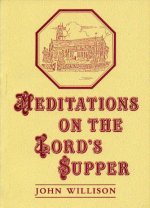
Meditations on the Lord's Supper
John Willison
Reformation Press, Stornoway, 1990, £1.80,
ISBN 1 872556 00 0 Publisher website
How do you prepare for the Lord's Supper? Hopefully you examine yourself in relation to appropriately challenging passages of Scripture and seek to acknowledge your condition in prayer. Sometimes, however, if we are honest, we find it difficult to maintain the right frame of spiritually-mindedness. These meditations stir the soul and provide an example of those spiritual breathings that we long for. There are nine meditations for before going to the table and eight for afterwards.
John Willison, best known as the author of the Mother's Catechism, ministered in Dundee almost 300 years ago. The language is not particularly dated, however, and the booklet is at a price that anyone could afford. Although they are short, only about a page and a half, they are especially full of the spiritual power of Scripture imagery as the following quotation shows.

O if our Lord Jesus Christ's love and glory would come flowing like a full sea, or the rushing of a mighty wind, and fill all the corners of His house and of His table, that great grace might be on all His people. O to hear a sound of going in the tops of the mulberry trees, a sign that God is gone forth before us to smite the hosts of our lusts, and triumph over our enemies. O that the kindly breathings and prosperous gales of God's Spirit would enliven all the drooping hearts, and fill all the empty sails of wind-bound communicants. O that the heavenly wind would blow from the right airth, that poor leaky vessels might come speed in their voyage, and sail straight forward to the shores of Emmanuel's land.

Click here for another excerpt.